Illano, Asturias: municipality guide
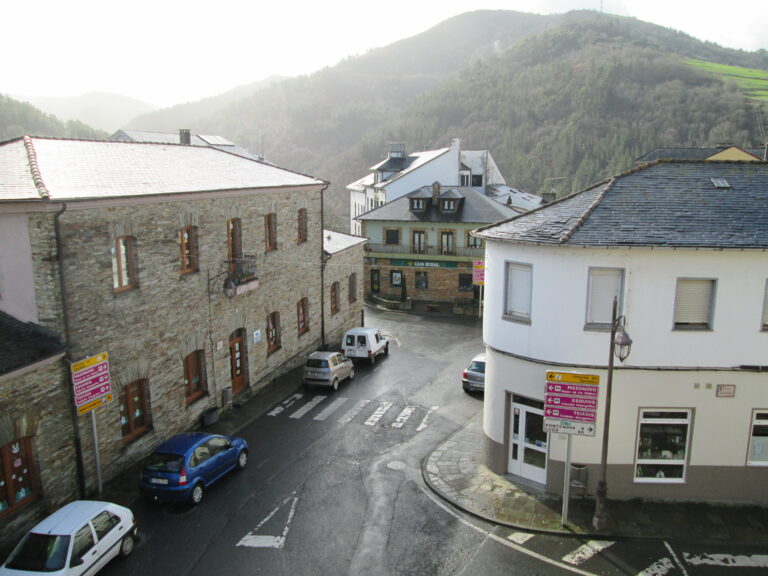
Illano (Eilao in Eonavian, its official place name) is a municipality in western Asturias, in the River Navia basin. It borders Boal, Pesoz, San Martín de Oscos, Villayón, Allande, Villanueva de Oscos and Castropol. Its capital is Illano. With 277 inhabitants and 102.70 km², it is one of the least populated municipalities in the Principality, a land of deep valleys and mid-slope settlements where Eonavian is spoken and whose landscape, untouched by industry, ranks among the best preserved in the west.
Things to see in Illano
The backbone of the municipality is the River Navia, which crosses it from south to east. On its right bank rise summits such as A Bobia, the roof of the municipality at 1,162 metres, along with A Vega, O Corrello and A Camposta; on the left, the sierras of Riodecoba and Estela. Its most important tributaries are the Cartelo, the Entrerrias, El Pato and the Ciyúa, and the water was dammed at Doiras, whose power station Electra de Viesgo built between 1929 and 1933 as the first of the Navia’s so-called «kilowatt route». Birches, oaks, cork oaks and hazels can still be seen among the scrub.
Illano is divided into 5 parishes —Bullaso, Gío, Herías, Illano and Ronda— and the population clusters in nuclei such as Cedemonio, Illano, La Montaña, Sarzol and Villar de Bullaso, always on mid-slopes given how rugged the terrain is.
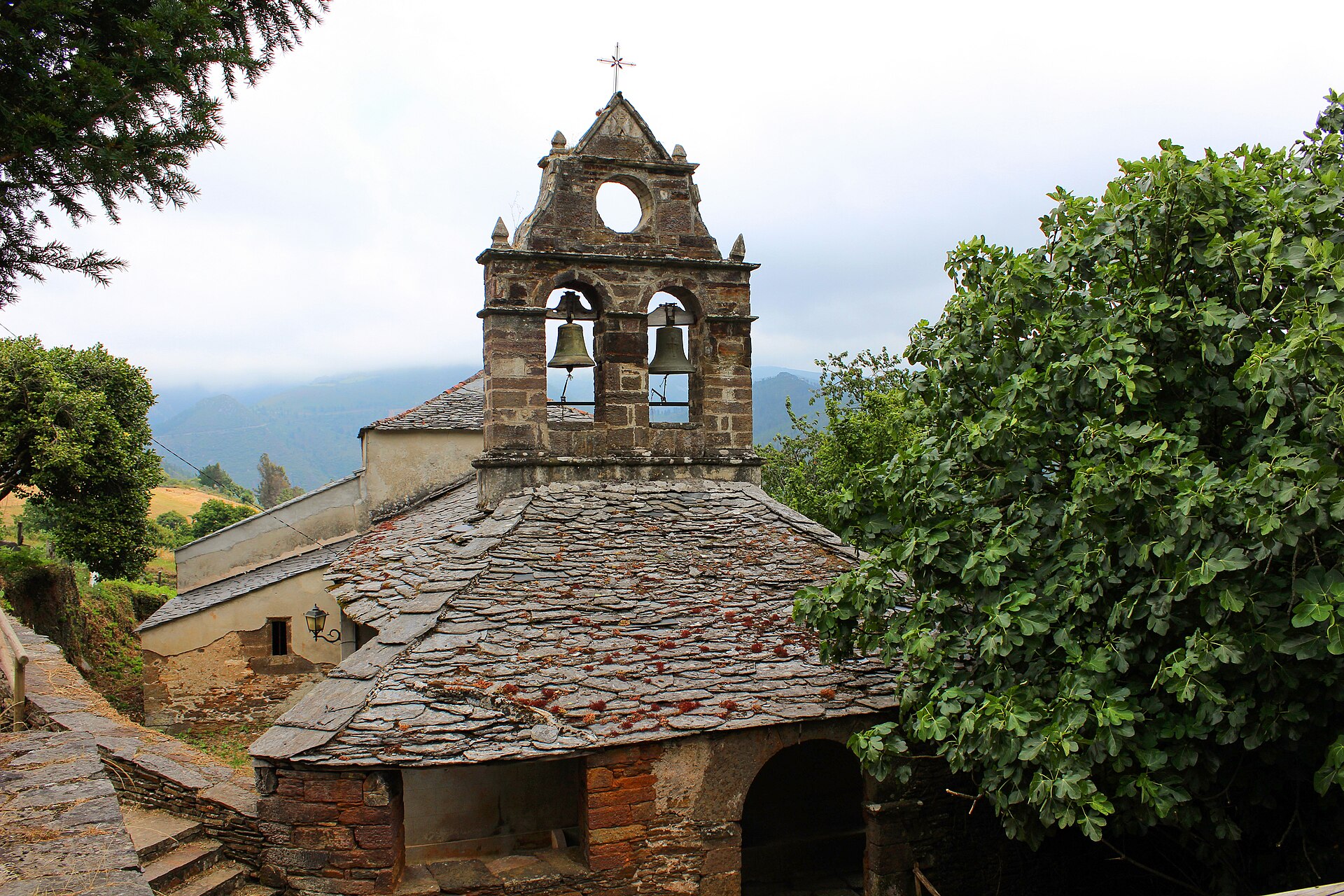
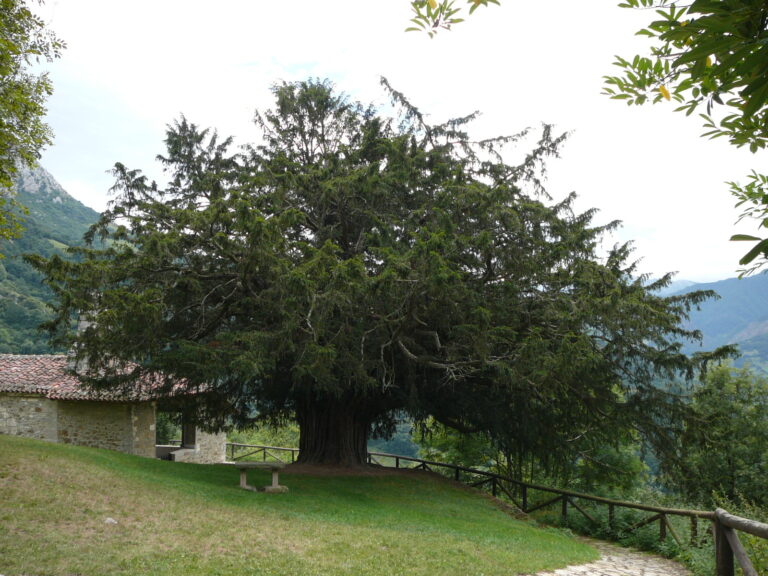
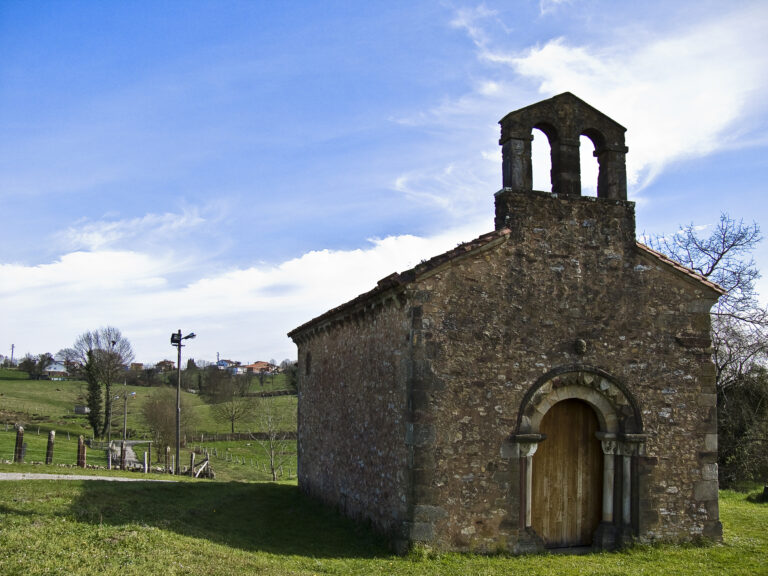
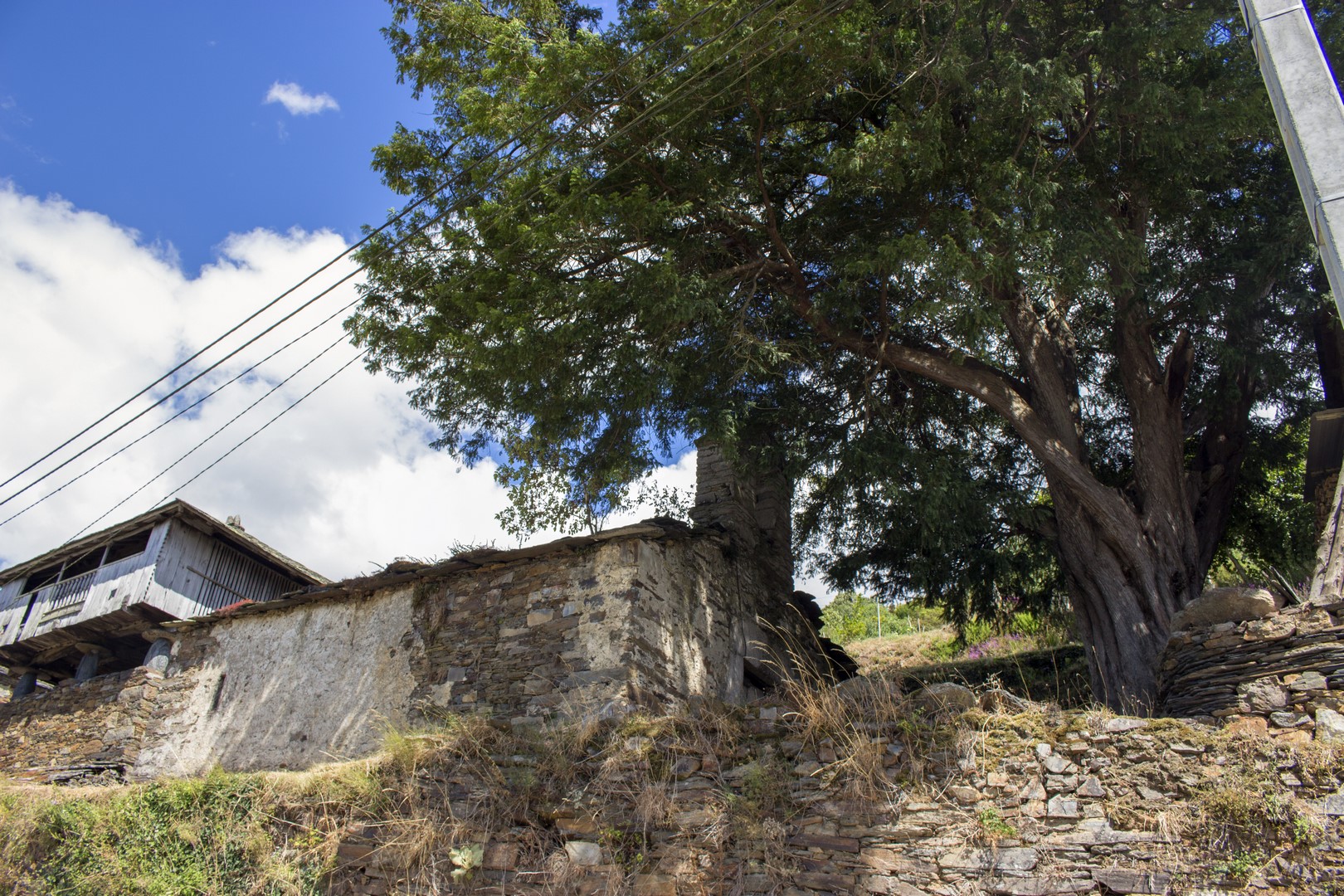
The village of San Esteban de los Buitres, with its slate houses in perfect harmony with the landscape, is a gem of vernacular architecture. Religious heritage is led by the sanctuary of Nuestra Señora del Pastor, in Pastur, built in 1665: its vault is decorated with folk paintings of the mysteries of the rosary, and beside it grows the Tejo de Pastur, a centuries-old yew. The church of Santa Leocadia de Illano holds a Crucified Christ altarpiece with a Gothic carving of Saint John from the 14th-15th centuries, and that of Nuestra Señora de Bullaso preserves a stone with a Visigothic inscription, dated between the 8th and 10th centuries.
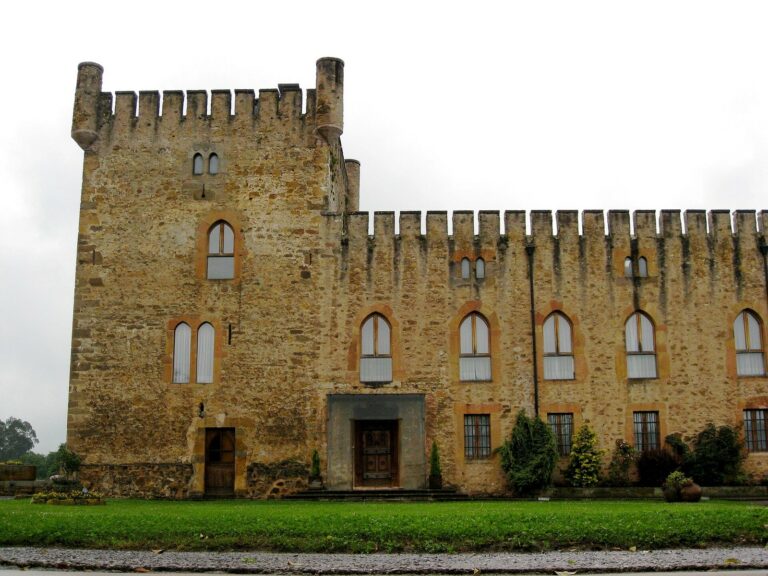
Further back in time, the Sierra de Carondio holds more than two dozen Neolithic burial mounds and the Entrerríos dolmen, known as La Llastra da Filadoira; from the hillfort era remain El Castelón and Los Castelloes, and from Roman rule, the memory of the comarca’s gold mines. The 18th-century Casa Armera de Mojardín, with its arcaded courtyard and two towers, is the finest example of the municipality’s manorial architecture.
How to get there
The main communication route is the regional AS-12 road, which crosses the municipality from south to north. Illano lies about 168 kilometres from Oviedo, in the heart of the western interior.
Festivals and gastronomy
The municipality’s most important festival is held on 15 August in Bullaso, which repeats with Santa María on the second Saturday of October. On 28 August, the San Agustín pilgrimage in Pastur brings together pilgrims from the municipality and its neighbours, and in September the Virgen de Pastur draws people from across the comarca and from Galicia to one of the main sanctuaries in western Asturias. The calendar is completed by El Carmen in the capital (16 July), San Pedro in Cedemonio (29 June) and San Roque in Navedo (16 August). The economy remains rooted in subsistence farming and livestock.
Municipality facts
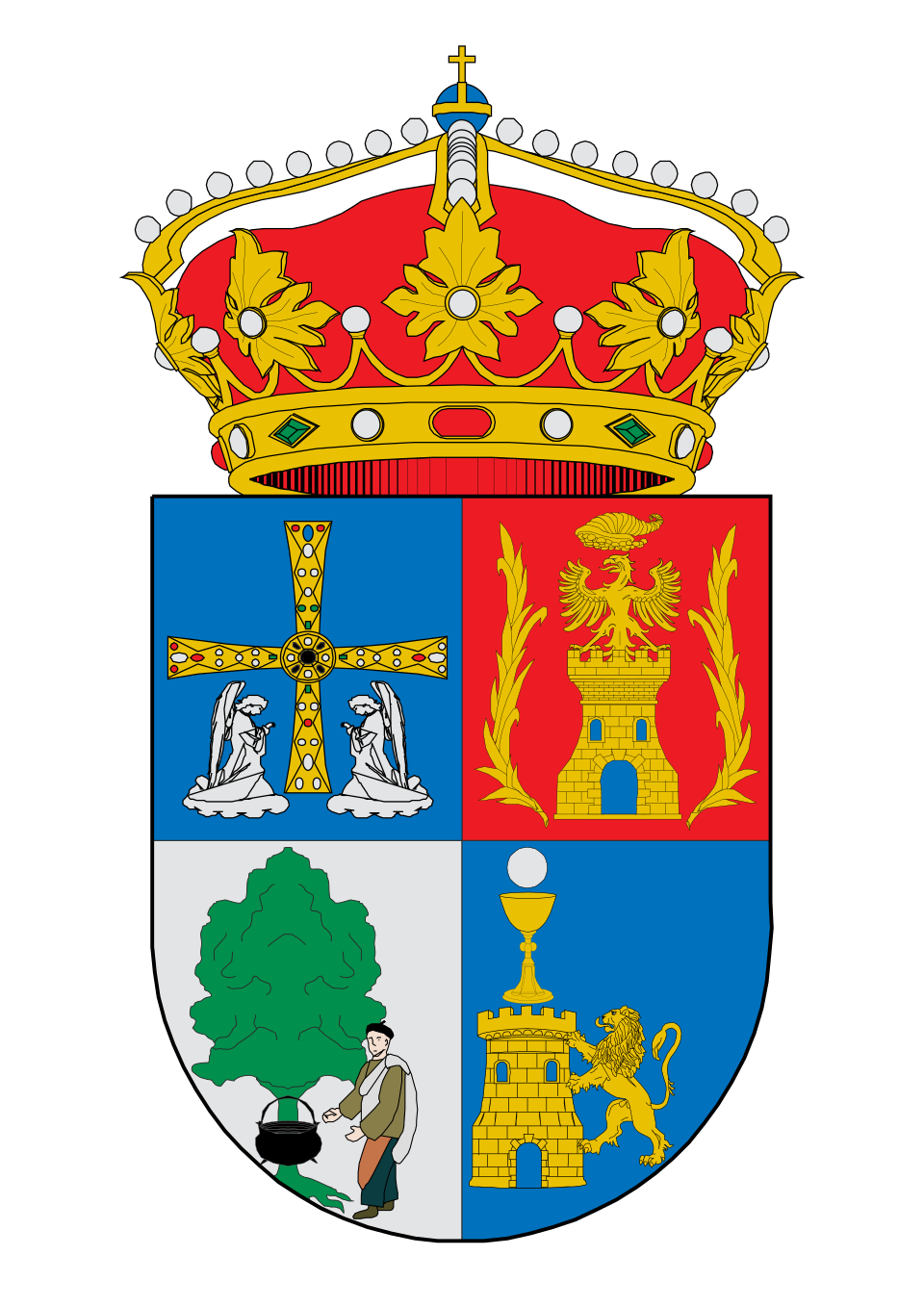
Coat of arms: Wikimedia Commons / Abraham Vázquez (CC0)
- Capital: Illano
- Population: 277 inhabitants (INE 2025)
- Area: 102.70 km²
- Zone: West
- Town hall: Plaza del Ayuntamiento, 1, 33734 Illano. Tel. +34 985 62 02 56
Neighbouring municipalities
Useful links
Want to correct or expand this information? Contact us.
See on the interactive map: The 78 municipalities of Asturias