Ibias, Asturias: municipality guide
Ibias is a municipality in western Asturias, in the southwestern corner of the Principality, bordering Galicia and Castile and León. It borders Allande, Degaña and Cangas del Narcea, the Lugo municipalities of Fonsagrada, Negueira de Muñiz and Navia de Suarna, and the León municipalities of Peranzanes and Valle de Ancares. Its capital is San Antolín de Ibias. With 1,084 inhabitants and 333.30 km², it is one of the largest municipalities in Asturias and one of the least densely populated: barely 3.25 inhabitants per square kilometre. Eonavian is spoken here, and part of the territory belongs to the Fuentes del Narcea, Degaña e Ibias nature park.
Things to see in Ibias
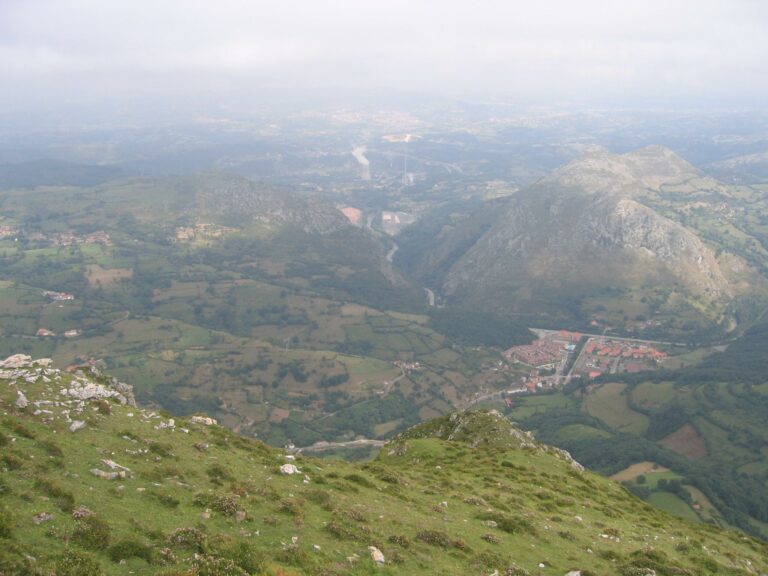
The relief shows sharp contrasts: from the 200 metres of the River Ibias to nearly 2,000 metres in its sierras. The highest summit is Pico Miravales, at 1,969 metres, followed by El Ciallo (1,549 m) and Las Leiras (1,427 m). The River Ibias crosses the municipality from east to west, gathering the waters of tributaries such as the Forma, the Cervos and the Piliceiro, while part of the territory drains into the Navia basin. Native vegetation is well preserved —cork oaks, chestnuts, strawberry trees, beeches and oaks— and the fauna includes capercaillies, wolves, roe deer, chamois and brown bears.
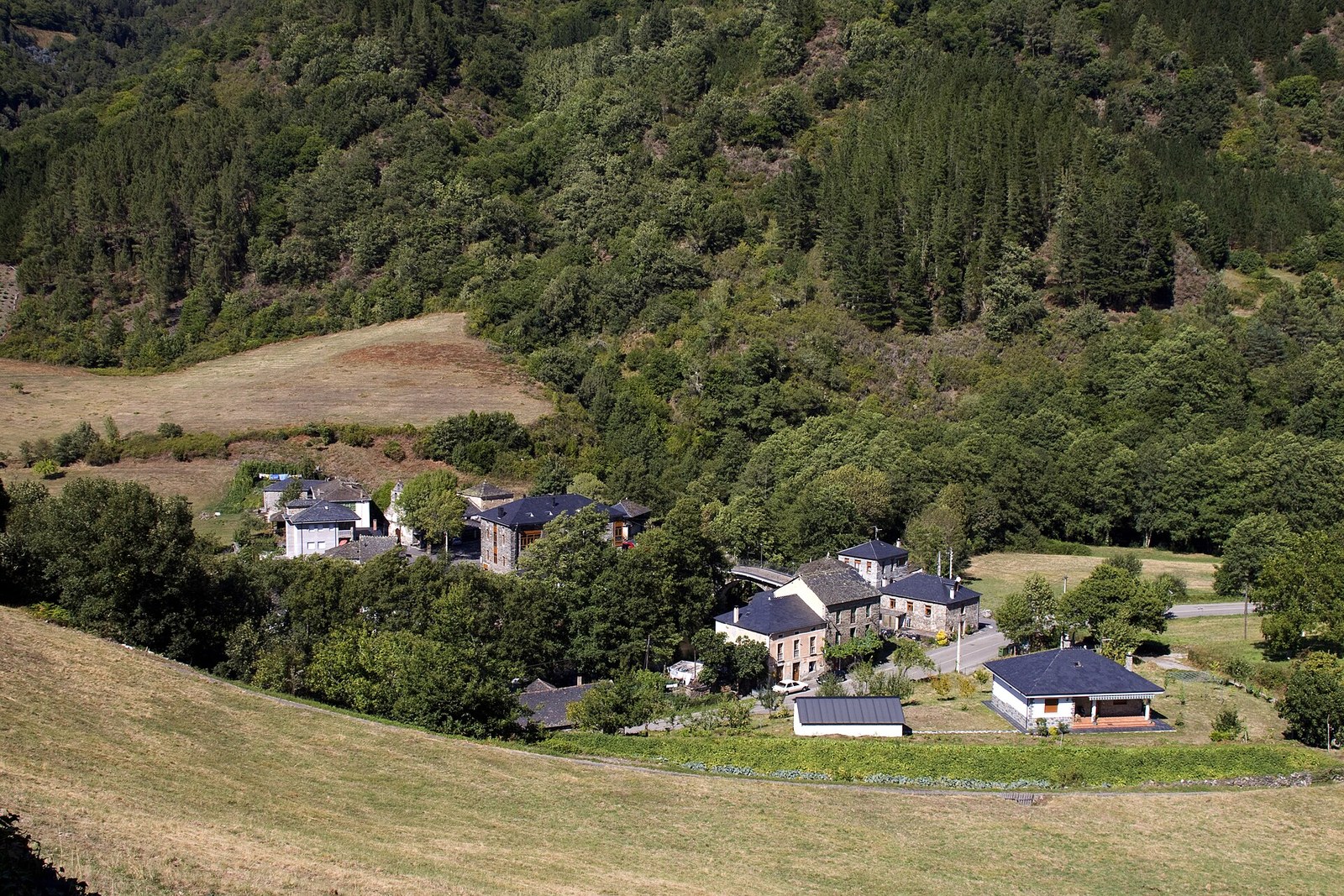
The municipality is organised into 11 parishes: Cecos, Marentes, Os Coutos, Pelliceira, San Antolín, San Clemente, Sena, Seroiro, Sisterna, Taladrid and Tormaleo, with settlements scattered across the mountain slopes. The archaeological heritage is remarkable: the dolmens of Pradías and Seroiro, hillforts in Cecos, Villameirín, Fondodevilla, Sena and Laguía, and abundant remains of Roman mining, which exploited the iron, silver and above all gold deposits of western Asturias.
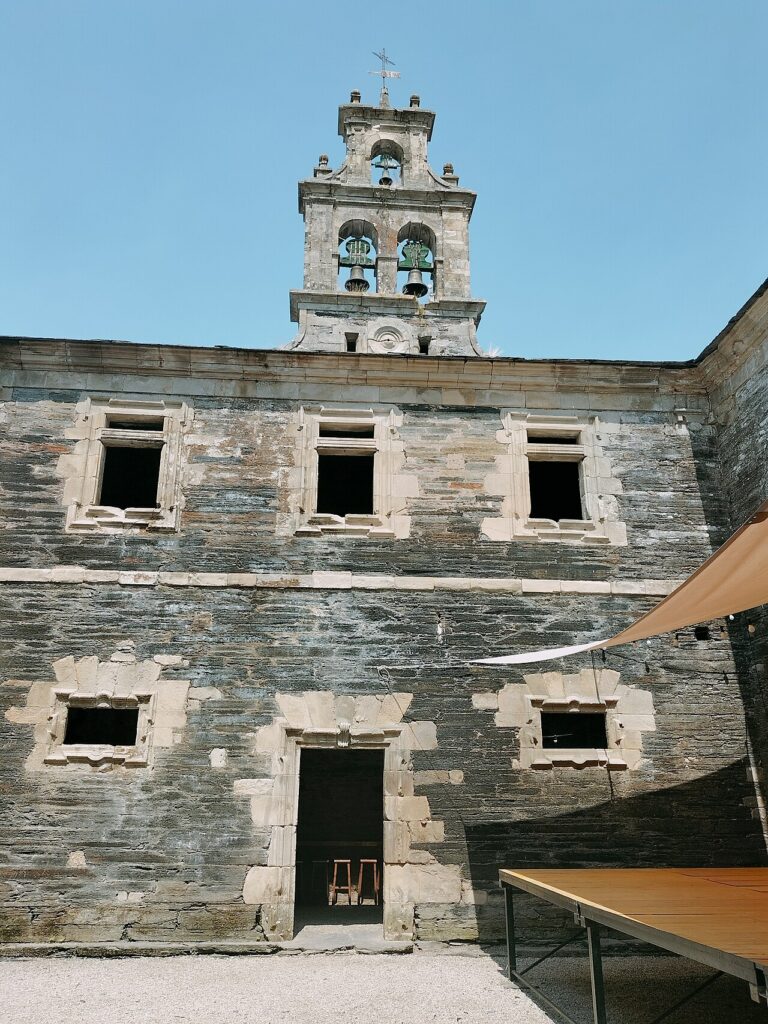
Notable buildings include the parish church of San Antolín de Ibias, a single-nave church with barrel vault and semicircular apse, remodelled between the 13th and 19th centuries and featuring an elegant portico of slender columns; the church of Cecos, with a wooden coffered ceiling and 18th-century Baroque altarpieces; and the 18th-century church of Taladrid, whose central chapel has a trough-shaped roof, very unusual in Asturias.
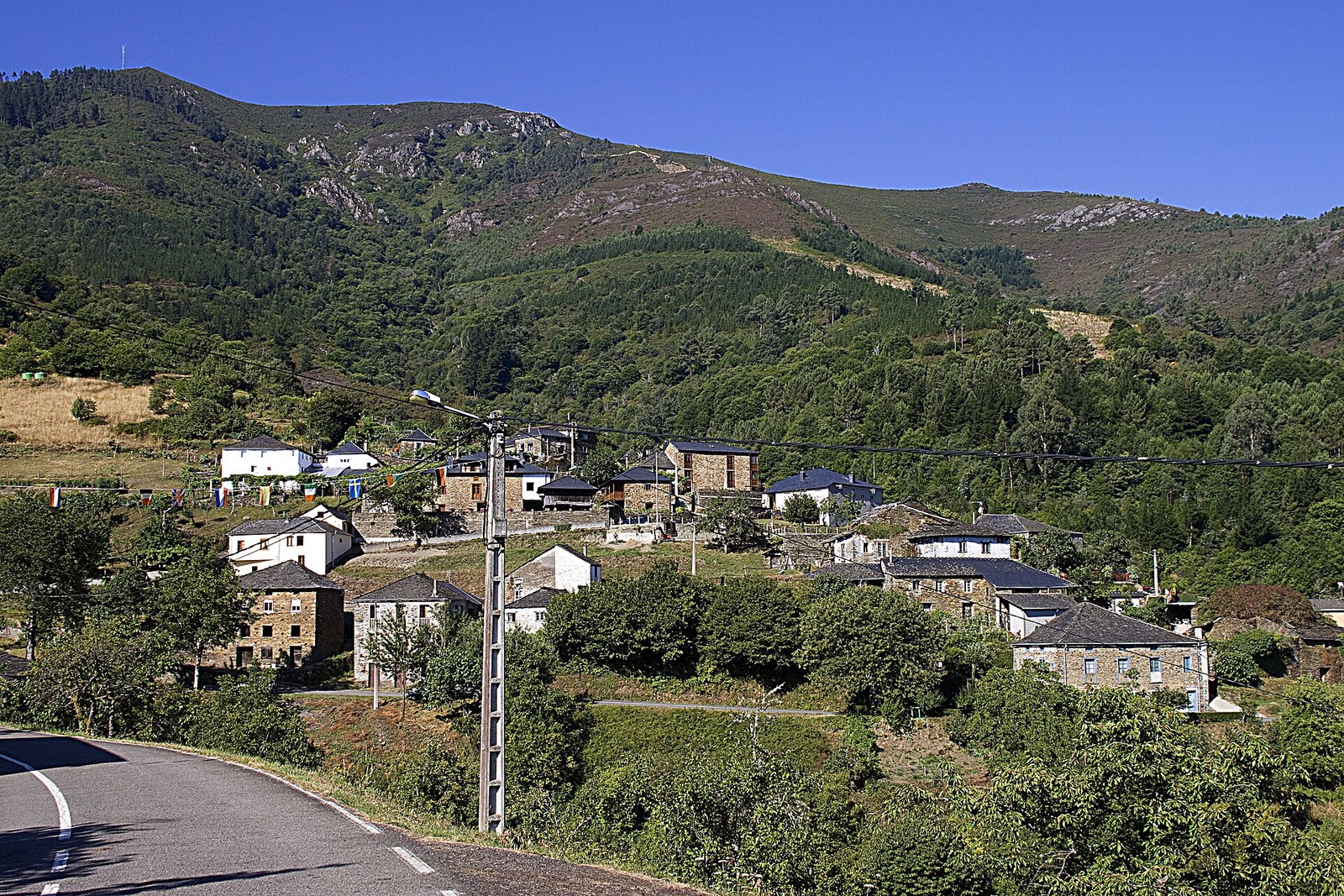
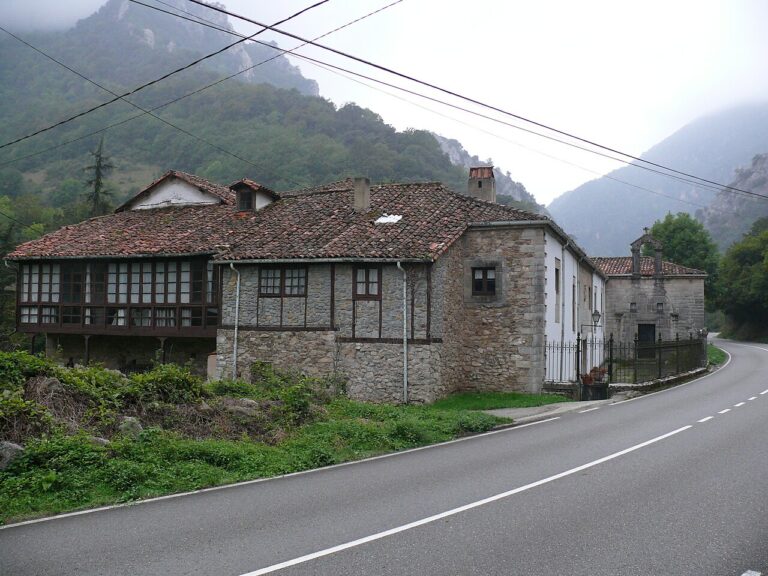
Vernacular architecture is another great attraction: teito buildings —stone walls with vegetal roofs of rye straw woven using the beu technique—, pallozas or house-stables, carved hórreos and, above all, the cortines: circular dry-stone enclosures with protruding slabs at the top to stop bears climbing up to the hives, such as the one near Villardecendias. In Seroiro there are also talameiros, small square towers for the hives. The tixileiros —wood craftsmen— and the cunqueiros, makers of wooden bowls, are remembered at the El Tixileiro Ethnographic Museum in Sisterna.
How to get there
San Antolín de Ibias lies about 148 kilometres from Oviedo. The AS-29 links the capital with La Regla, the AS-212 connects it with Degaña, and the AS-210, via Marentes, reaches the border with Galicia. These are comarcal mountain roads, typical of a municipality in southwestern Asturias.
Festivals and gastronomy
The festive calendar moves through the parishes all year round: San José in Seroiro (19 March), San Pedro in Alguerdo (29 June), Santa María Magdalena in Marentes (22 July), San Agustín in Sena (third weekend of August), the patron saint festival of San Antolín (first Sunday of September) and San Clemente (23 December). The most unusual is El Aguinaldo – La festa dos reises, on 6 January, a revived celebration in which several costumed characters ask for the aguinaldo, considered by the town council part of the municipality’s ethnographic heritage. Local produce rules the table: the traditional vineyards of Cecos, with important wineries, and excellent mountain heather honeys.
Municipality facts
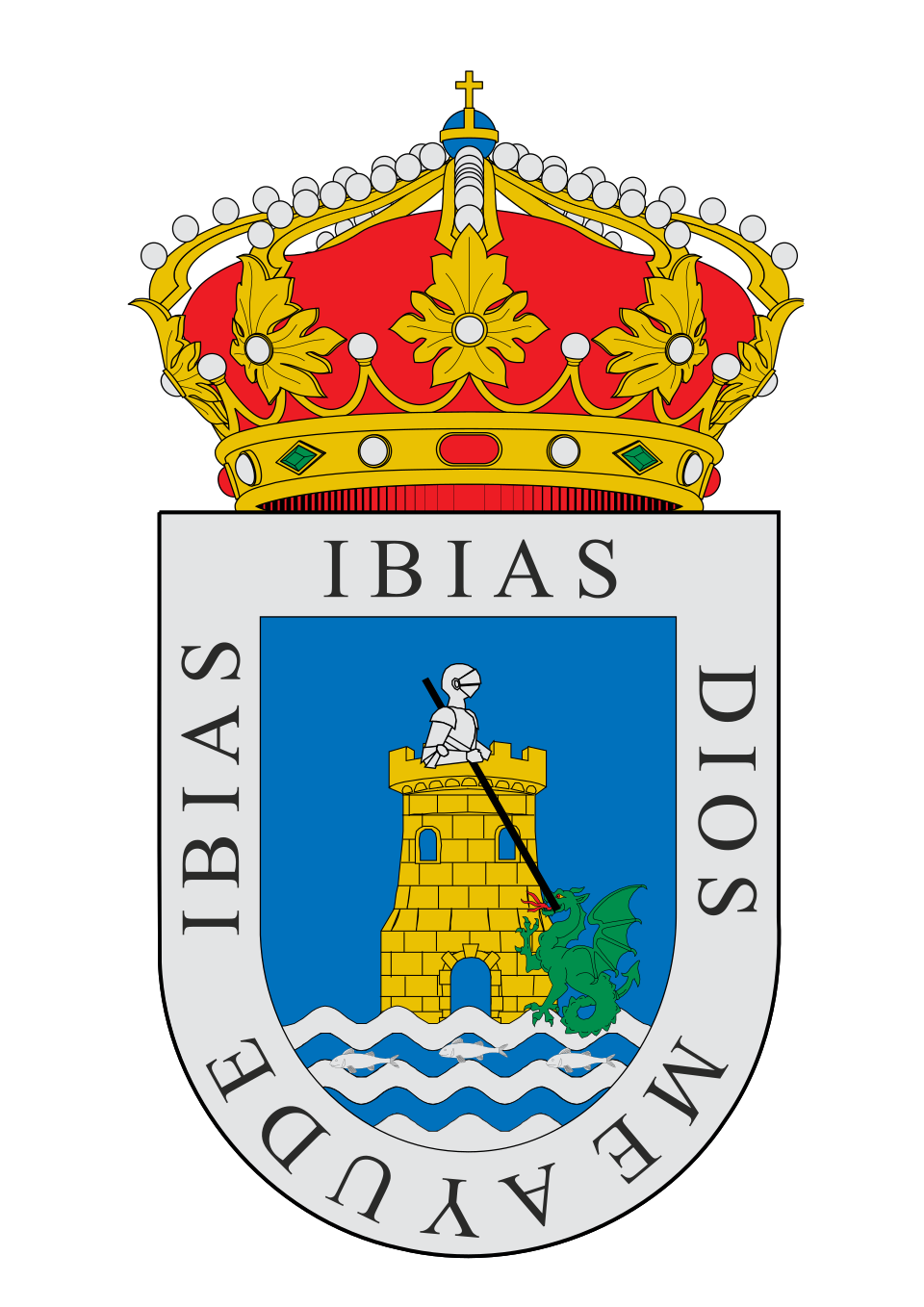
Coat of arms: Wikimedia Commons / Abraham Vázquez (CC0)
- Capital: San Antolín de Ibias
- Population: 1,084 inhabitants (INE 2025)
- Area: 333.30 km²
- Zone: West
- Demonym: ibiense
- Town hall: Plaza del Ayuntamiento, s/n, 33810 San Antolín de Ibias. Tel. +34 985 81 61 01
Neighbouring municipalities
- Allande
- Fonsagrada (Lugo, Galicia)
- Negueira de Muñiz (Lugo, Galicia)
- Degaña
- Cangas del Narcea
- Peranzanes (León, Castile and León)
- Valle de Ancares (León, Castile and León)
- Navia de Suarna (Lugo, Galicia)
Useful links
Want to correct or expand this information? Contact us.
See on the interactive map: The 78 municipalities of Asturias