The names water and stone left behind: pre-Roman place names in Los Oscos and Somiedo
A map that reads like an archive
There are districts where the road map doubles as a document from two thousand years ago. In Los Oscos and Somiedo, in western Asturias, many names of rivers, valleys and hamlets were formed before Latin arrived, and they have survived by word of mouth ever since. They are pre-Roman place names: words from the languages spoken by the Astures and their neighbours, fossilised in the landscape. Reading them carefully is a way of travelling without moving: every name describes the water, the height or the pass that whoever coined it had in front of them.
Honesty first: almost none of these etymologies is one hundred per cent certain. Toponymy is a science of reasoned hypotheses, and specialists — such as Julio Concepción Suárez, author of the Diccionario toponímico de la montaña asturiana — present their proposals with a prudent “perhaps”. What follows collects those proposals as the sources phrase them, not as certainties carved in stone. The names, though, are carved in the landscape itself.
It all starts with a river: Astura and the Astures
The biggest name of all, that of Asturias itself, is a river name. As Jairo J. García Sánchez explains in Rinconete, the Centro Virtual Cervantes journal, Asturias derives from the ancient name of the river Esla, the Astura, of pre-Roman etymology: the people living along its banks were called asturi, and the region they occupied became Asturia, plural Asturias in the Middle Ages. In pre-Roman times the Astures occupied most of present-day Asturias, between the river Sella to the east and the Navia to the west, according to the classical sources and historiography.
The most famous animal in Asturian fauna comes from the same root: the asturcón. The Spanish federation of livestock breeders (RFEAGAS) notes that this native pony was bred by the Astures for farm work and for war, that the Romans admired it and made it known in Rome, and that the earliest surviving references date from 78 BC. The breed, now listed in the official catalogue of endangered native breeds, nearly vanished: the breeders’ association was founded in 1979 to recover it when barely 23 animals belonging to four breeders remained. The horse’s name and the region’s name are, deep down, the same name.
The Eo-Navia: a pre-Roman landscape of water
Between the rivers Eo and Navia, Eonavian (Galician-Asturian) is spoken, and a particularly old layer of place names survives. The study of the area’s toponymy compiled by Concepción Suárez from University of Oviedo work is, above all, an inventory of waters:
- Navia: the Indo-European root *naw-, “valley”, has been proposed, so the river would be “the valley, the river between mountains”; another line relates it to naws, “ship”, and to the idea of a navigable river.
- Eo: for the river that names the district, an Indo-European water root (*ag-, *aig-) has been suggested, with the almost solemn sense of “the river par excellence”.
- Ibias: the name of the river and the municipality would be explained by a pre-Roman base *ib-, “water”.
- Barcia (in Santa Eulalia de Oscos): a pre-Celtic base *bar-k-, “water, height”, is attributed to it: a damp place, a place of waters.
- Suarón (in Vegadeo): it carries the hydronymic suffix -ón, so frequent in stream names across the north.
The lesson is clear: in a land of deep-cut valleys, the first thing to be named is the water that opens them. The rivers are older than the villages, and their names often are too.
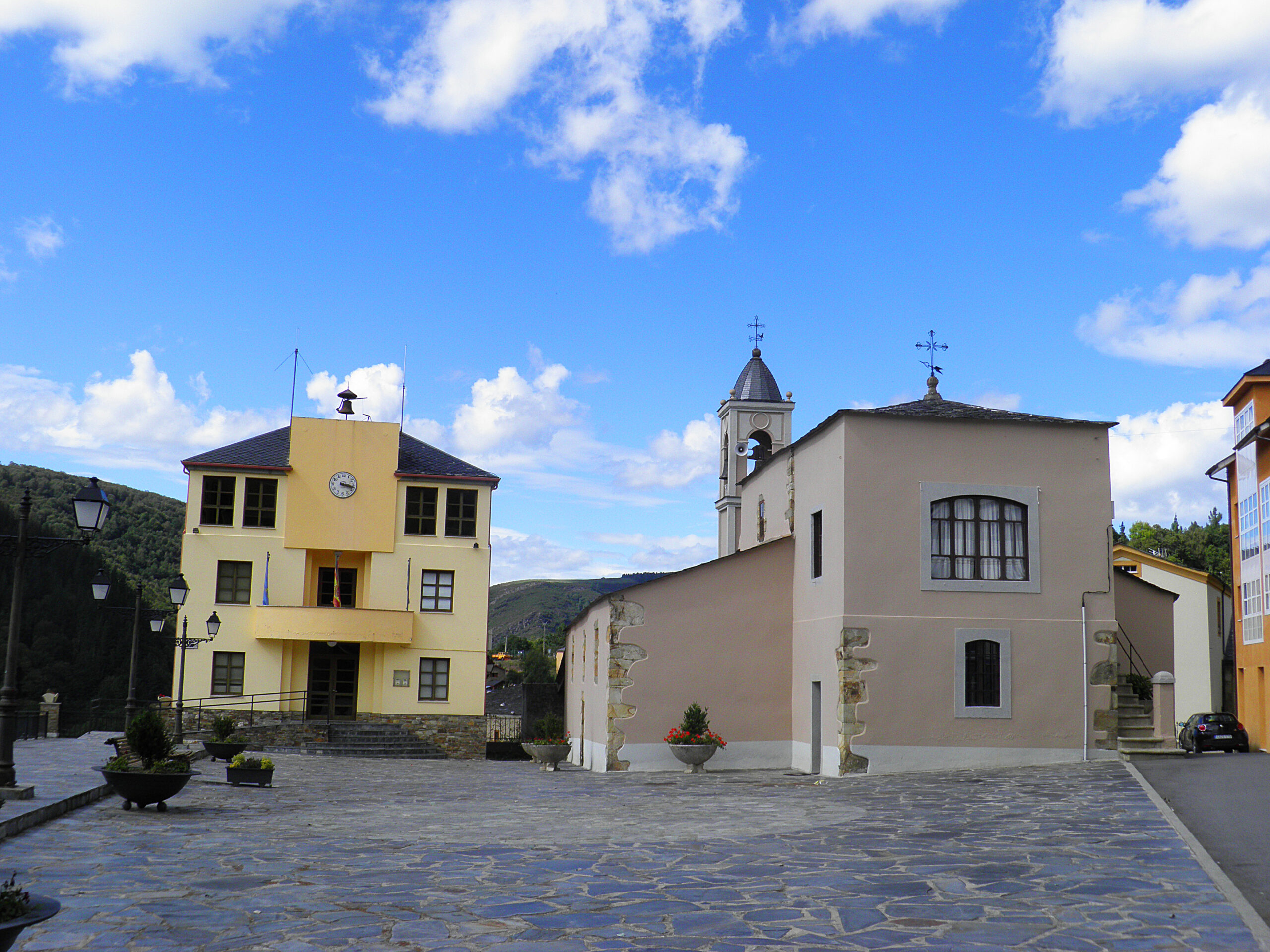
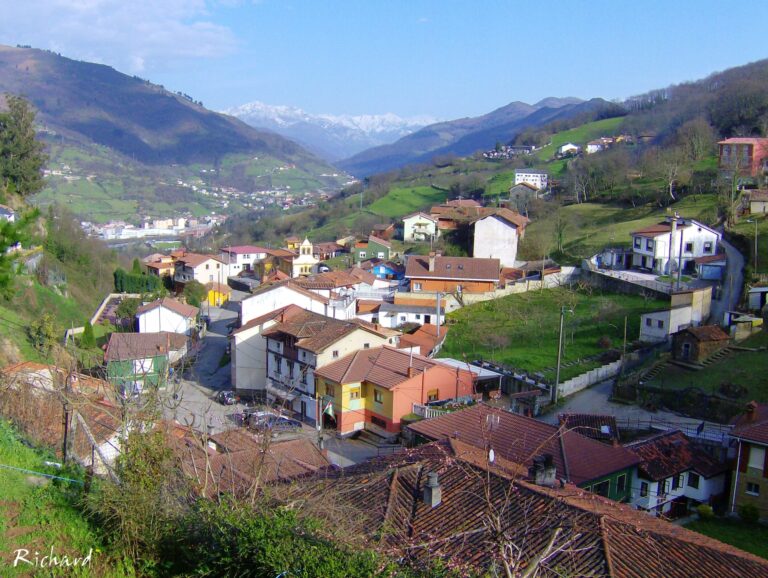
Santa Eulalia de Oscos (Santalla d’Ozcos in Eonavian), in the Agüeira valley: one of the three capitals of Los Oscos. Photo: Wikimedia Commons / Carmenmoran (CC BY 4.0)
Oscos: the name nobody has settled
Not even the district’s own name has a single explanation. Concepción Suárez’s toponymic dictionary records for Oscos — Ozcos in Eonavian — a possible link with osca, “notch”, in the sense of “a pass between crags”; and it does not rule out a derivation from the Latin Osca. It is a good example of how this discipline works: two or three hypotheses live side by side for decades, waiting for a document to tip the balance.
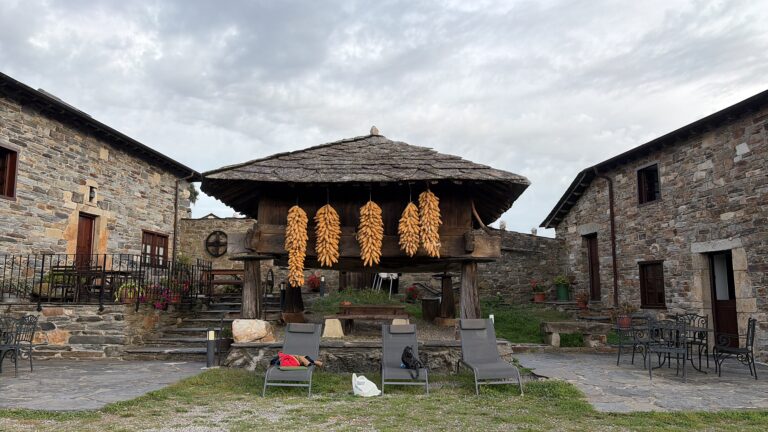
What is documented is the territory: three municipalities — San Martín de Oscos, Santa Eulalia de Oscos and Villanueva de Oscos — totalling 186.66 km² of valleys carved by the Agüeira and its tributaries, inside the Río Eo, Oscos y Terras de Burón Biosphere Reserve. In 2016 the three were jointly named Exemplary Village of Asturias. And their hamlets keep the same old layer of names: Barcia, Ferreira, Murias, Pousadoiro or Outeiro — the last one transparent to any Galician-Asturian speaker: the outeiro, the small rise from which the valley is surveyed.
Somiedo: not everything old is Celtic
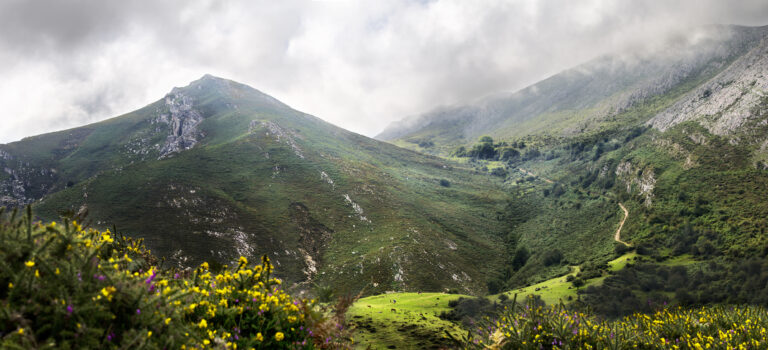
At the other end of the west, Somiedo teaches toponymy’s second great lesson: not every old name is pre-Roman. The most widely accepted theory derives Somiedo from the Latin summetum, “a set of summits, the highest ground” — the literal description of a municipality crowned by El Cornón (2,194 m) and Peña Orniz (2,190 m). A Latin name, yes, but one of perfect geographical accuracy.
The same is true of its capital: Pola comes from the Latin populus, and the polas were the new settlements founded in the Middle Ages to repopulate western Asturias. And of teito, Somiedo’s emblematic word for its thatched-roof cabins: it comes from the Latin tectum, “roof”. Over the pre-Roman substrate, Latin and then Romance added layer upon layer, just as the landscape itself added summer pastures, enclosures and paths.
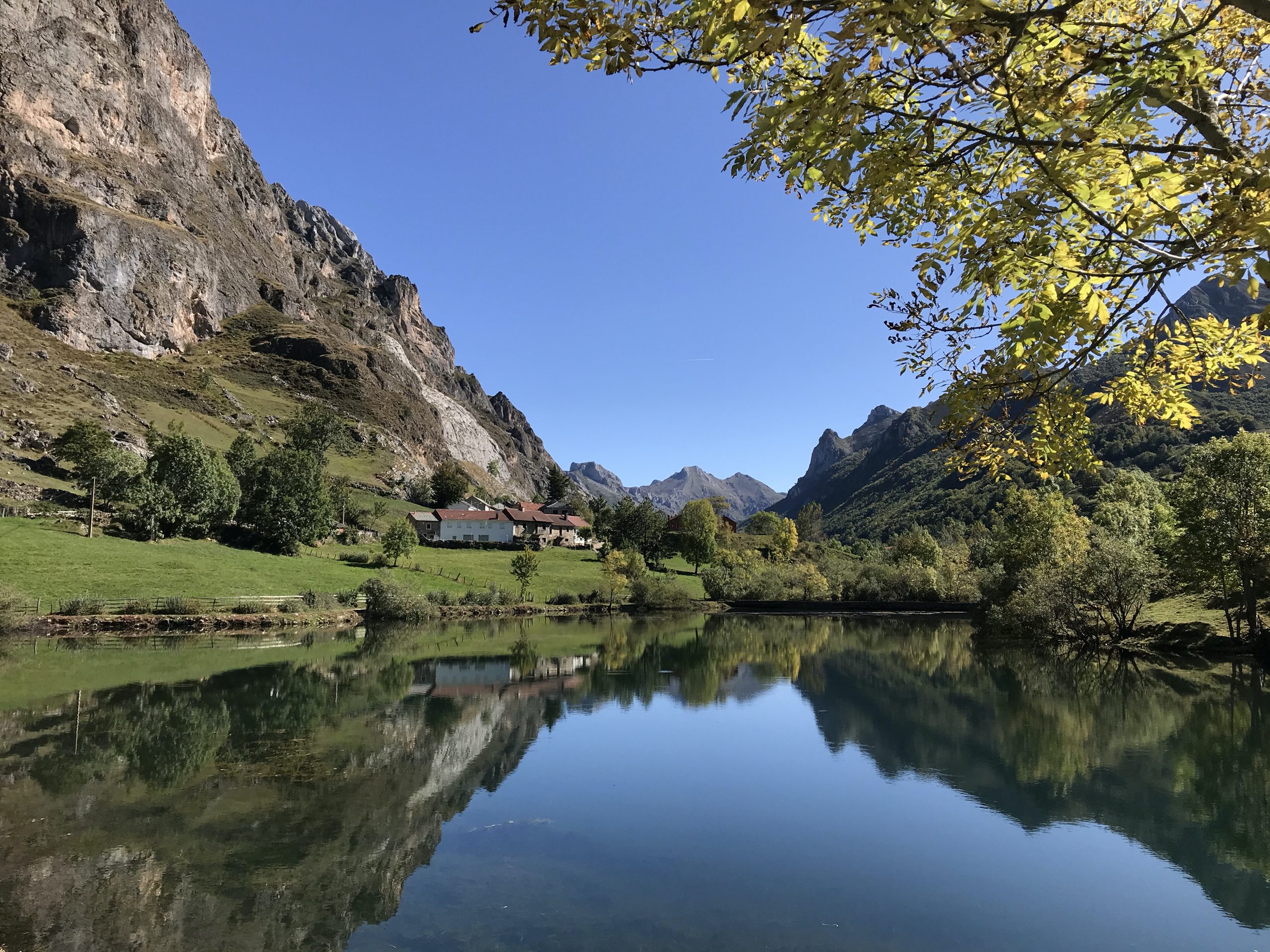
A high mountain lake in Somiedo Natural Park, in a municipality whose name — from the Latin summetum, “a set of summits” — describes the land around it. Photo: Wikimedia Commons / Waltie (CC BY-SA 4.0)
Valleys named after their river
Somiedo is organised into valleys, and its valleys are named after their rivers: Saliencia, Valle, Somiedo and Pigüeña name both the water and the territory it drains, as the geographical description of the municipality itself underlines. It is the oldest way of finding one’s bearings: a valley is named not after whoever rules it, but after whatever crosses it.
Up high lie the glacial Saliencia lakes — La Cueva, Almagrera or La Mina, Cerveriz and Calabazosa or Lago Negro — declared a Natural Monument in 2003 together with nearby Lago del Valle. Calabazosa, too, has kept etymologists busy: Concepción Suárez rules out any connection with pumpkins (calabazas) and proposes a pre-Roman root *karr- (voiced as garr-), referring to the abundance of rock around the lake. Anyone who has walked among those black stones will understand the hypothesis without needing a dictionary.
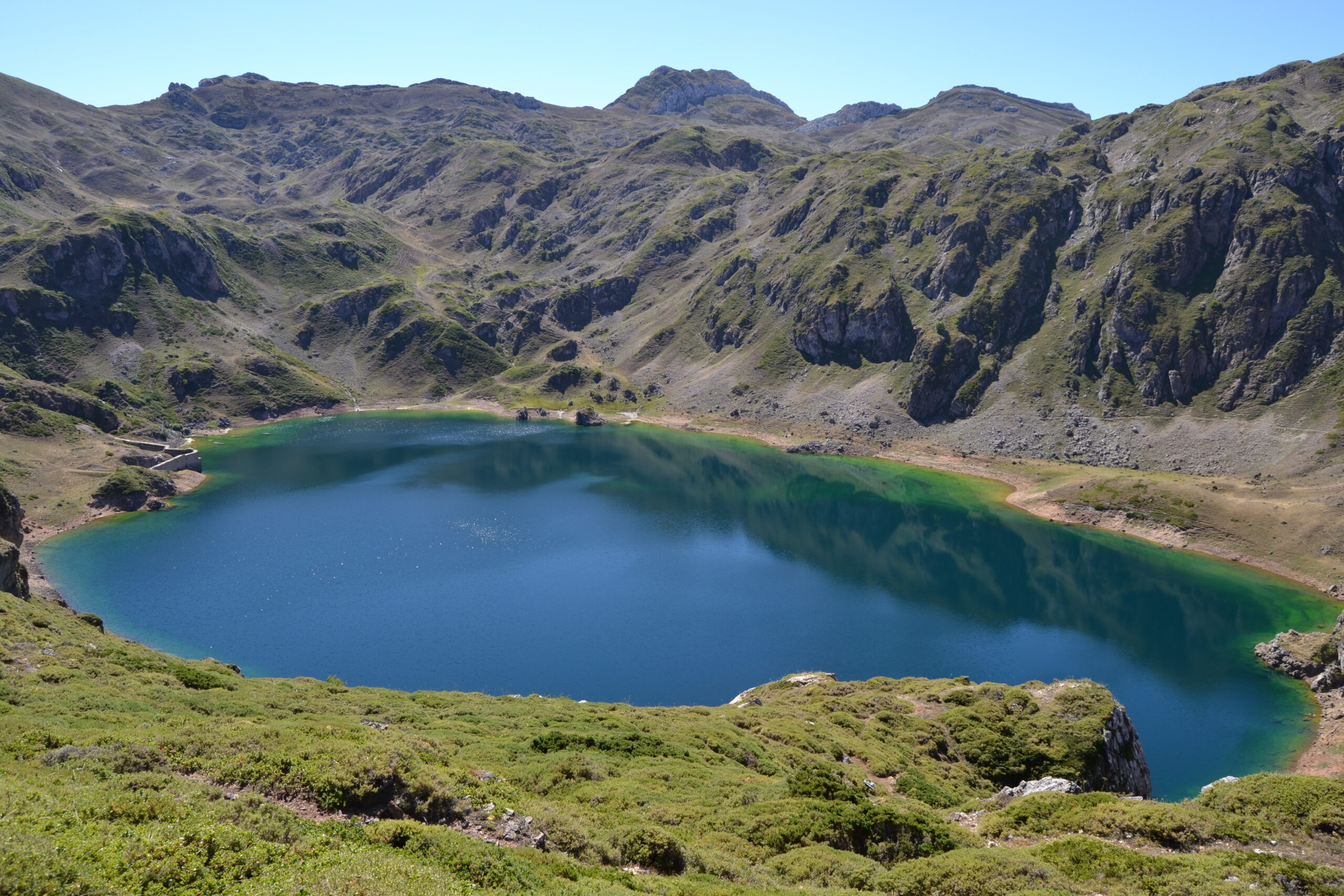
Lake Calabazosa, or Lago Negro, in the Saliencia lake group (Somiedo). Photo: Wikimedia Commons / Saliencia2013 (CC BY-SA 3.0)
How to read this landscape
You do not need to be a philologist to practise this reading: a detailed map and the habit of asking about every name are enough. In Los Oscos, look for the hamlets ending in -eira and -eiro — Ferreira, Ferreirela, Outeiro, Pousadoiro — the mark of Eonavian; in Somiedo, for the pastures and valleys that repeat their river’s name, and for the officially recovered Asturian forms, such as El Vaḷḷe for Valle del Lago. Behind each one there is a decision taken centuries ago by someone who needed another person to understand exactly which water, which height or which pass they meant.
That, in the end, is toponymy’s first use: finding your way. That it also guides us through time — back to the Astures, to the river Astura, to the horses Rome took away from these mountains — is the added gift of the hidden valleys of western Asturias.
Sources: Julio Concepción Suárez, toponymic dictionary and studies of Eo-Navia place names (xuliocs.com); Jairo J. García Sánchez, “Asturias y sus topónimos”, Rinconete, Centro Virtual Cervantes; Wikipedia (Somiedo, Santa Eulalia de Oscos, Conjunto lacustre de Somiedo, Astures); RFEAGAS, Asturcón breed profile; Turismo Asturias, Oscos-Eo district.