What to see in Oviedo: complete guide to the Asturian capital
«Oviedo is like a fairy tale,» said Woody Allen, who even has a statue in the city. And he wasn’t exaggerating: founded in the 8th century as the capital of the Kingdom of Asturias, Oviedo combines a stately old town, the finest pre-Romanesque art in Europe, a gastronomy that takes itself very seriously, and the perfect size to explore on foot. This guide covers the essentials, with up-to-date practical information.
Oviedo live
Watch Oviedo live on our webcams page
Oviedo Cathedral and the Holy Chamber
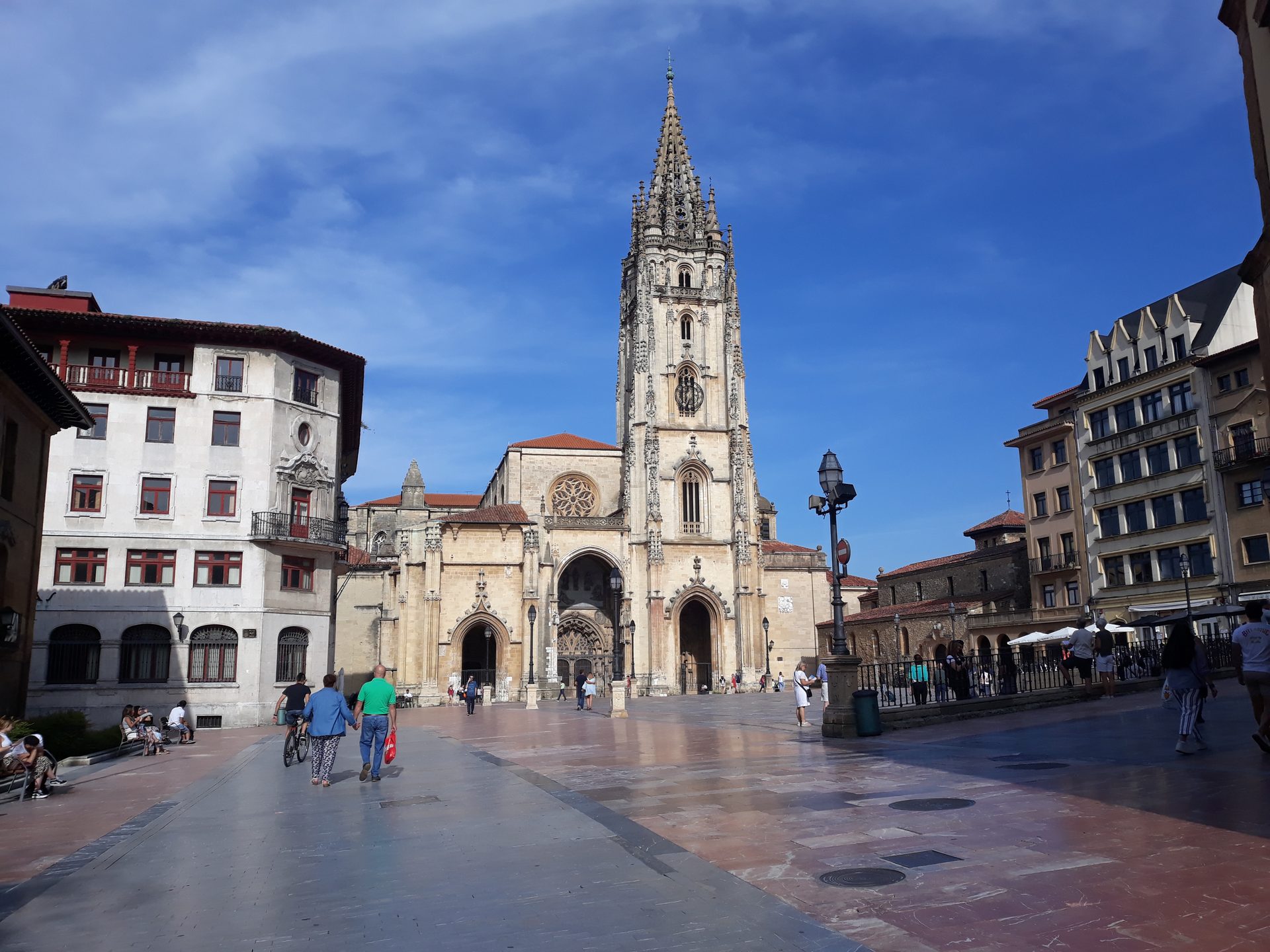
Photo: Simon Burchell, CC BY-SA 4.0, via Wikimedia Commons
The Cathedral of San Salvador is the historic heart of the city and the starting point of any visit. Mostly Gothic (construction began in the late 13th century), it holds inside its most valuable jewel: the Holy Chamber, of pre-Romanesque origin and a UNESCO World Heritage Site. It keeps the treasures of the Asturian monarchy: the Victory Cross, the Cross of the Angels, the Holy Ark and the Holy Shroud.
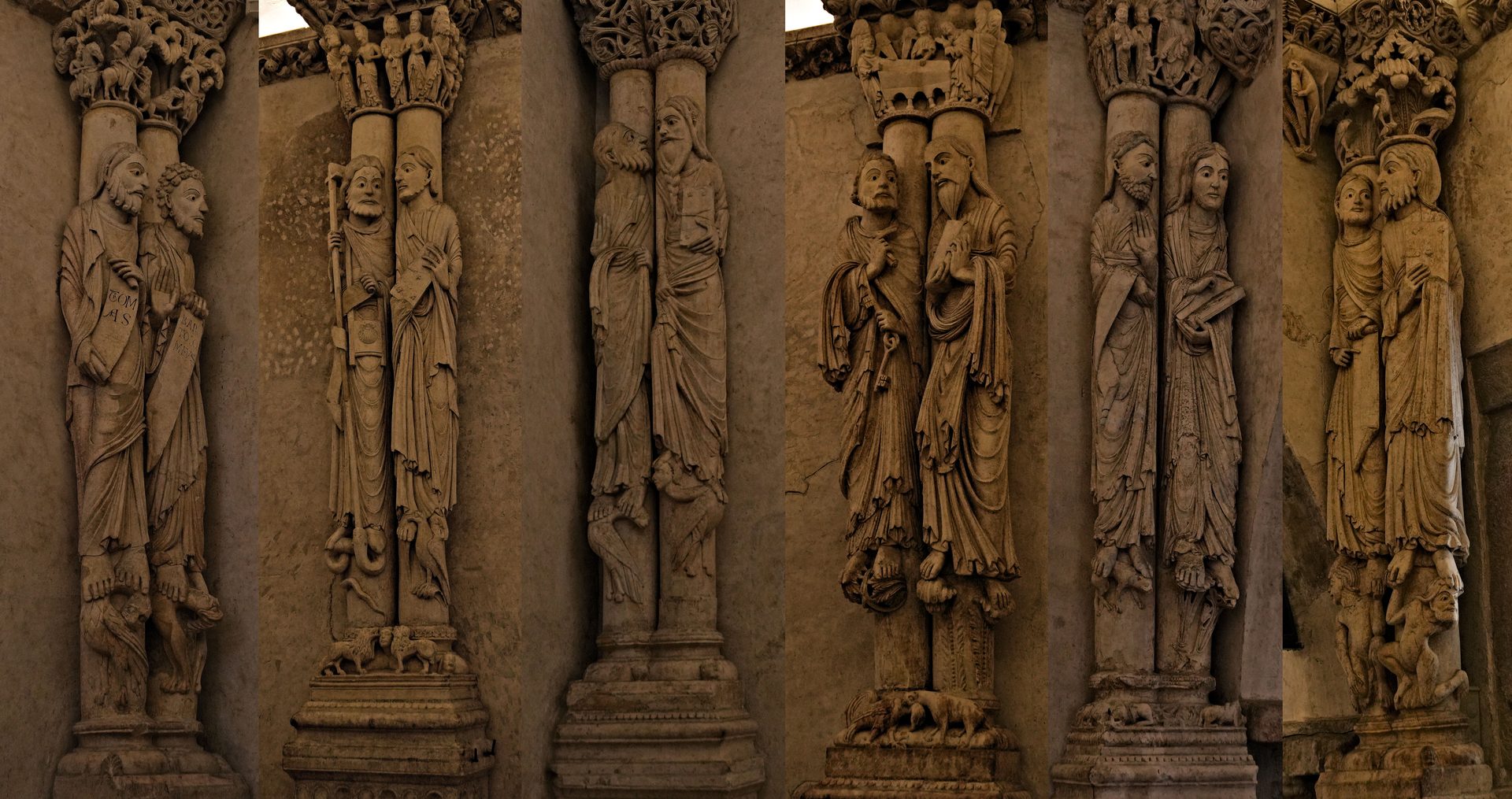
Photo: Coralma, CC0 (public domain), via Wikimedia Commons
Don’t miss the 16th-century High Altarpiece, one of the most important in Spain, or the ambulatory with its chapels. And remember the old pilgrims’ saying: «Whoever goes to Santiago and not to San Salvador, visits the servant and not the Lord.» The Way of St. James began here, in the time of Alfonso II the Chaste.
Practical information (approximate): general admission is around €7 (with audioguide), with discounts for seniors, students and pilgrims; children under 12 enter free. Opening hours vary by season (longer in summer, with uninterrupted hours) and there are no tourist visits on Sundays. Guided tours of the Gothic tower are also available (around €10, one hour). It’s best to confirm hours on the official website before going, as liturgical celebrations may change them.
The old town: squares, sculptures and La Regenta
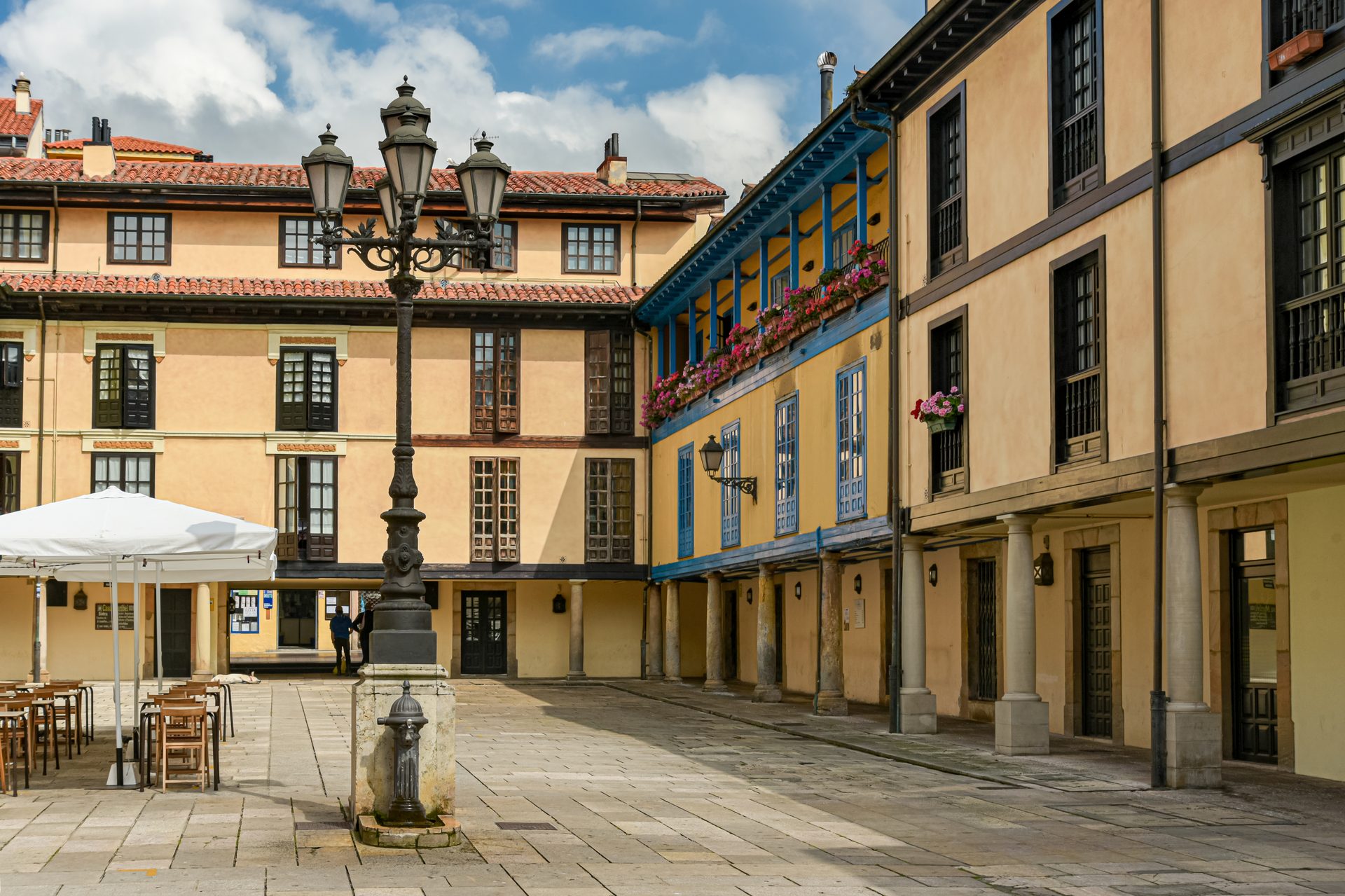
Photo: Jorge Franganillo, CC BY 2.0, via Wikimedia Commons
Oviedo is for walking. The old town is a maze of arcaded squares, palaces and cider bars to wander without hurry:
- Fontán Square: the liveliest, with the old market, colorful houses and terraces for cider.
- Constitution Square: with the Town Hall and a local atmosphere.
- Porlier Square: stately, with the palace of the Counts of Toreno.
- Gascona Street: the famous «cider boulevard», an entire street of cider bars side by side.
- Corrada del Obispo and Umbrella Square: charming corners for vermouth or dinner.
Oviedo is the Vetusta of La Regenta, the novel by Leopoldo Alas «Clarín». Literature lovers can follow in its footsteps around the city. And there’s another fun game: Oviedo has more than a hundred sculptures scattered through its streets. Look for Botero’s Maternity in La Escandalera, Mafalda, Woody Allen himself or La Regenta. Several companies offer daily free tours around the old town in about two hours: a great way to start your visit.
Staying in the center changes everything: everything is within walking distance. The Gran Hotel España, the family hotel on Jovellanos street, and the Viviendas Oviedo Catedral apartments, next to the Cathedral, are the two in-house options.
The Campoamor Theatre
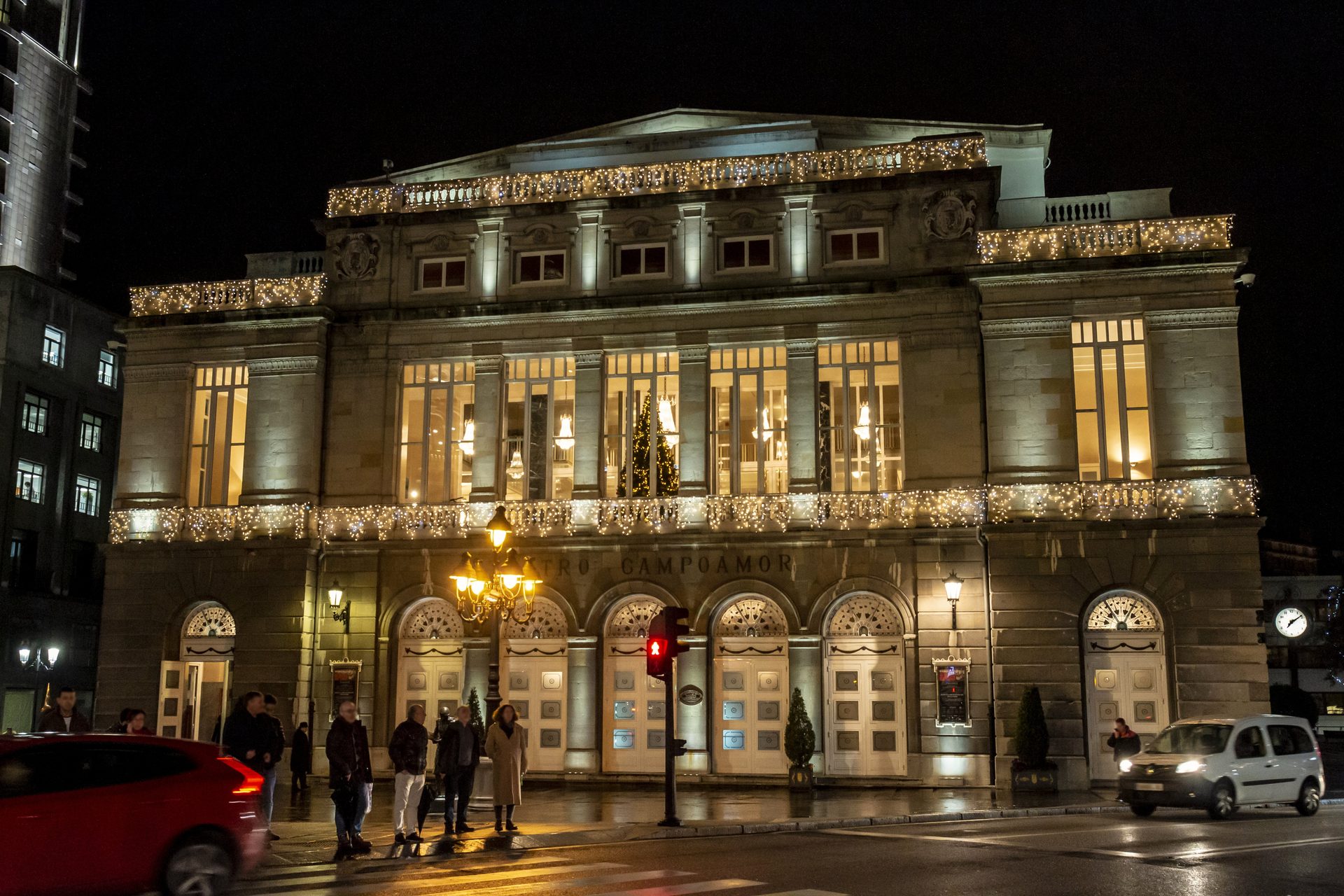
Photo: David Álvarez López, CC BY 2.0, via Wikimedia Commons
Opened in 1892, it is one of the most prestigious opera houses in Spain, with a leading lyric season. But its worldwide fame arrives every October, when it hosts the Princess of Asturias Awards ceremony.
In summer, dramatized tours visit the noble areas and the hidden corners of the theatre (dressing rooms, stage, rehearsal rooms) with period characters: a very entertaining way to see it from the inside (in 2026 they ran in August, at 5:30 and 7:30 PM, around €12 general admission). Check the City Council’s events calendar if you travel on those dates.
Mount Naranco: Santa María and San Miguel
Just 3–4 kilometres from the center, Mount Naranco holds the two jewels of Asturian pre-Romanesque art, a UNESCO World Heritage Site since 1985:
Santa María del Naranco (year 842): built as the palace of King Ramiro I, it is the crowning work of European pre-Romanesque.
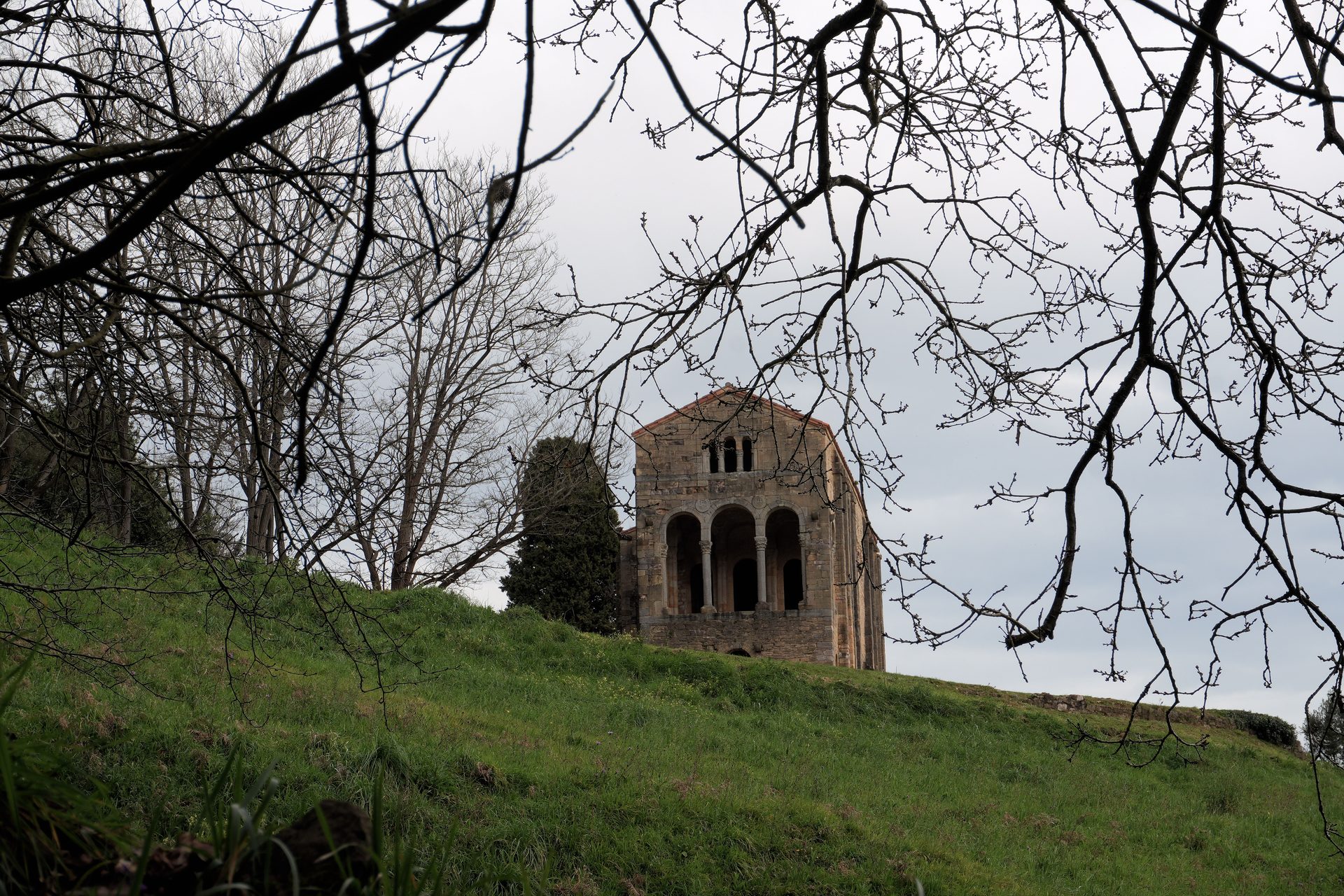
Photo: Coralma, CC0 (public domain), via Wikimedia Commons
San Miguel de Lillo: a hundred metres away, the palace church of the same king, with remains of its original murals.
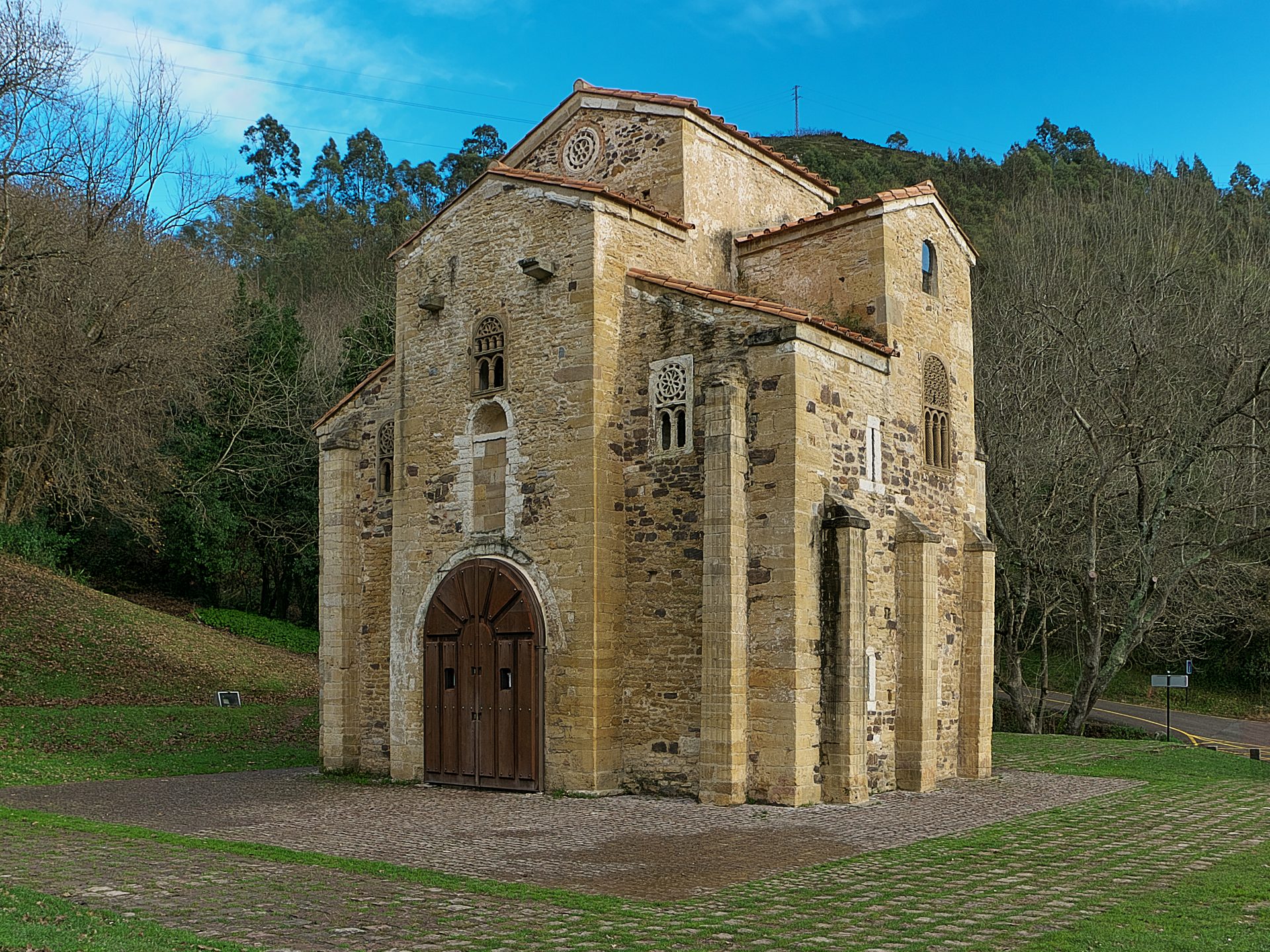
Photo: Jl FilpoC, CC BY-SA 4.0, via Wikimedia Commons
The joint guided tour costs around €3 and includes both monuments; on Mondays admission is free (no guide). It’s a ten-minute drive up (free parking) or city bus (lines A1/A2). Before going in, it’s worth stopping at the interpretation center.
And don’t come down without visiting the Cristo del Naranco: the viewpoint, free and always open, offers the best panorama of Oviedo, especially at sunset.
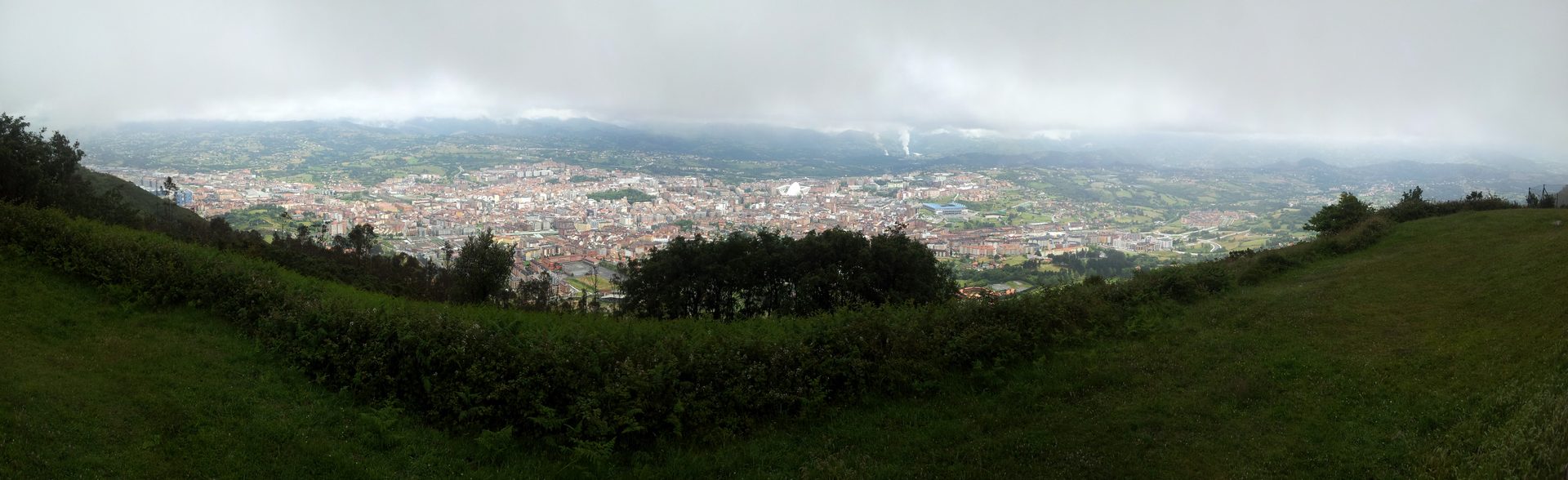
Photo: David Perez, CC BY 4.0, via Wikimedia Commons
San Francisco Park
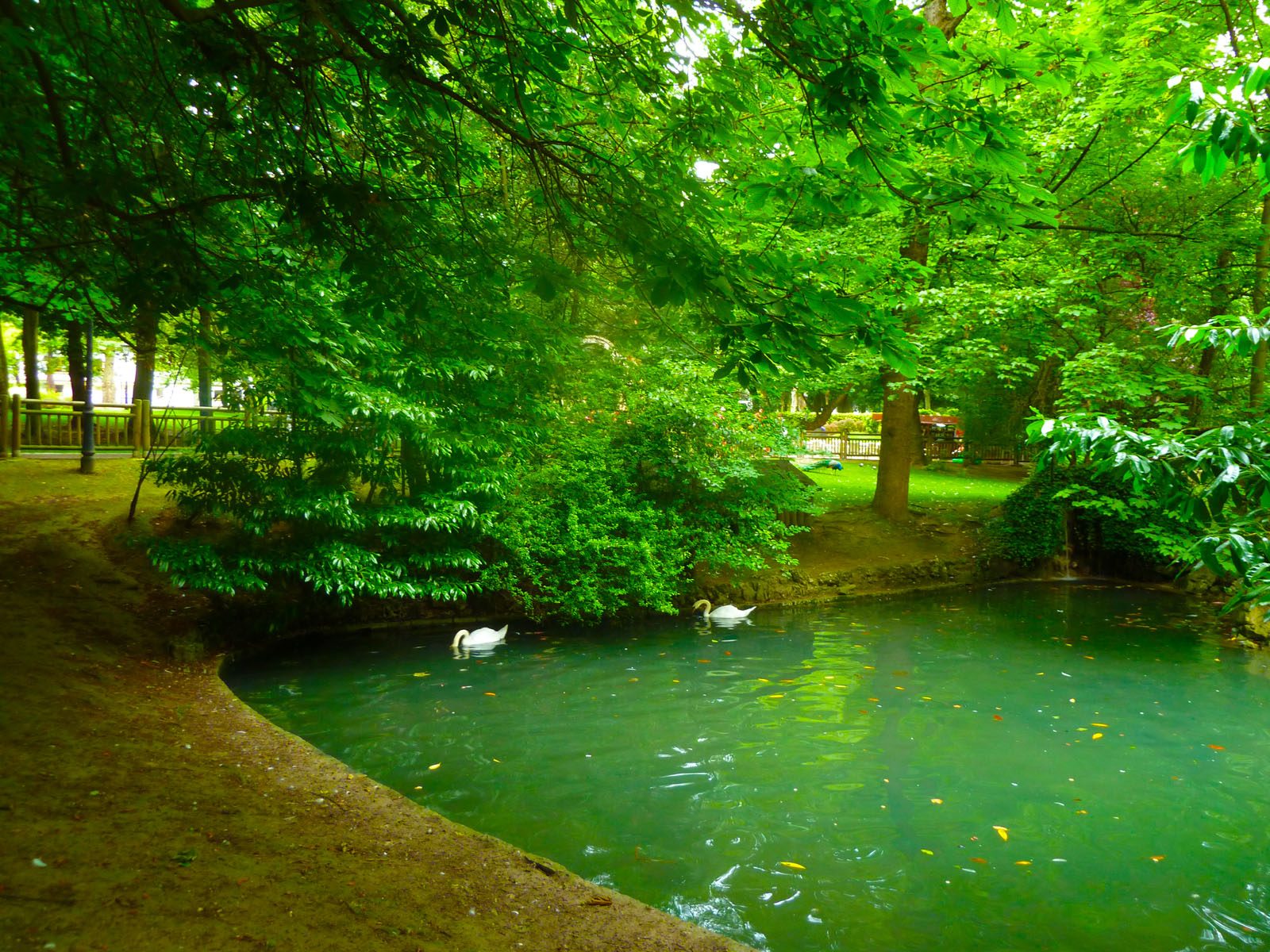
Photo: Nacho, public domain, via Wikimedia Commons
The city’s great green lung, right in the center. It occupies the former orchard of the Franciscan convent and is the locals’ favourite promenade: centuries-old trees, a duck pond, free-roaming peacocks and more sculptures. Perfect for resting between visits or for a picnic if the weather is kind.
Where to eat: cachopo, cider and carbayones
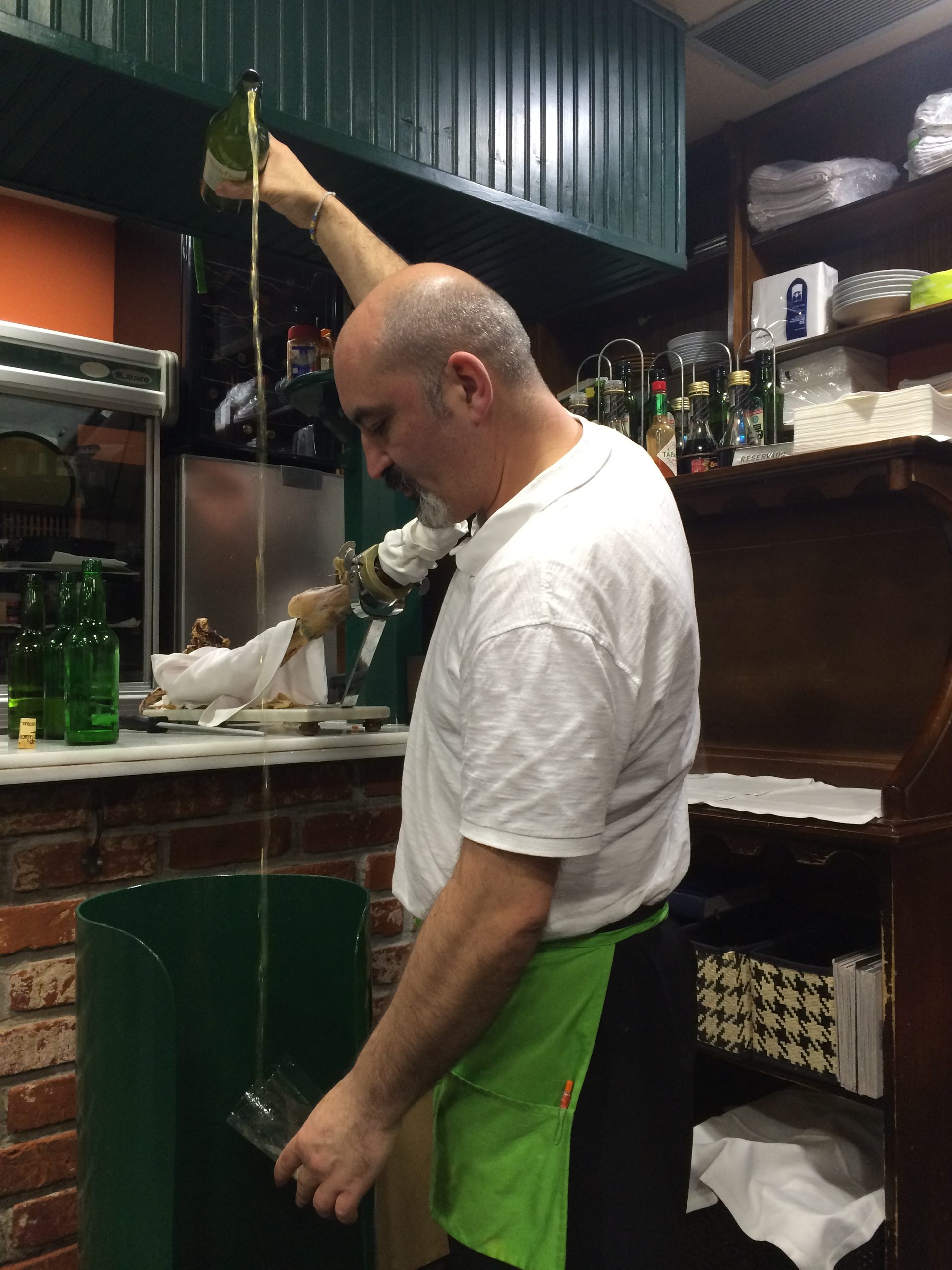
Photo: Hispalois, CC BY-SA 4.0, via Wikimedia Commons
In Oviedo you eat very well at reasonable prices. The essentials:
- Cachopo: the star dish. Two veal steaks from Asturian beef stuffed with ham and cheese, breaded and fried. There are classic and creative versions; order one to share if you’re not very hungry, because they’re huge.
- Fabada and Asturian pote: good spoon food, especially in winter.
- Cider: order it on Gascona street or in Fontán and watch the pouring ritual. Cider is drunk in one gulp (culín) and always shared.
- Cheeses: Cabrales, Gamonéu, Afuega’l pitu… Asturias has more than forty varieties.
- Carbayones: the typical Oviedo sweet, made of puff pastry and almond. The name comes from «carbayón», the nickname for Oviedo locals (from the carbayu, the centuries-old oak that was the city’s symbol).
Practical tip: the set lunch menu in Oviedo is still a bargain in many old-town spots, with starter, main, dessert and cider or wine for a fixed price. And don’t leave without trying draft vermouth in the Fontán taverns: a local institution at aperitif time.
And for dessert, don’t leave Oviedo without trying the moscovitas, the famous almond and chocolate pastries from Confitería Rialto — we tell their story in our special (Spanish version for now).
Oviedo in one or two days: suggested itinerary
If you have one day: start at the Cathedral and the Holy Chamber first thing (you’ll avoid the groups), stroll through the old town to Fontán square, have a cachopo in the area, go up to Naranco in the afternoon and finish with ciders on Gascona street.
If you have two days: spend the first day on the above at a slower pace (add the Museum of Fine Arts, free, next to the Cathedral) and save the second for an excursion: Gijón in the morning (San Lorenzo beach and Cimavilla) or Covadonga and the Lakes if you prefer mountains. Come back to sleep in Oviedo: dinner in the old town after a day out is one of the great pleasures of the trip.
Nearby excursions
Oviedo is a perfect base for exploring Asturias:
- Gijón (25–30 min): the other great Asturian city, with San Lorenzo beach, Cimavilla and the seafaring atmosphere.
- Avilés (30 min): a beautiful historic center and the Niemeyer Center.
- Covadonga and the Lakes (1 h 15 min): the essential mountain excursion. Go up early to avoid queues in high season.
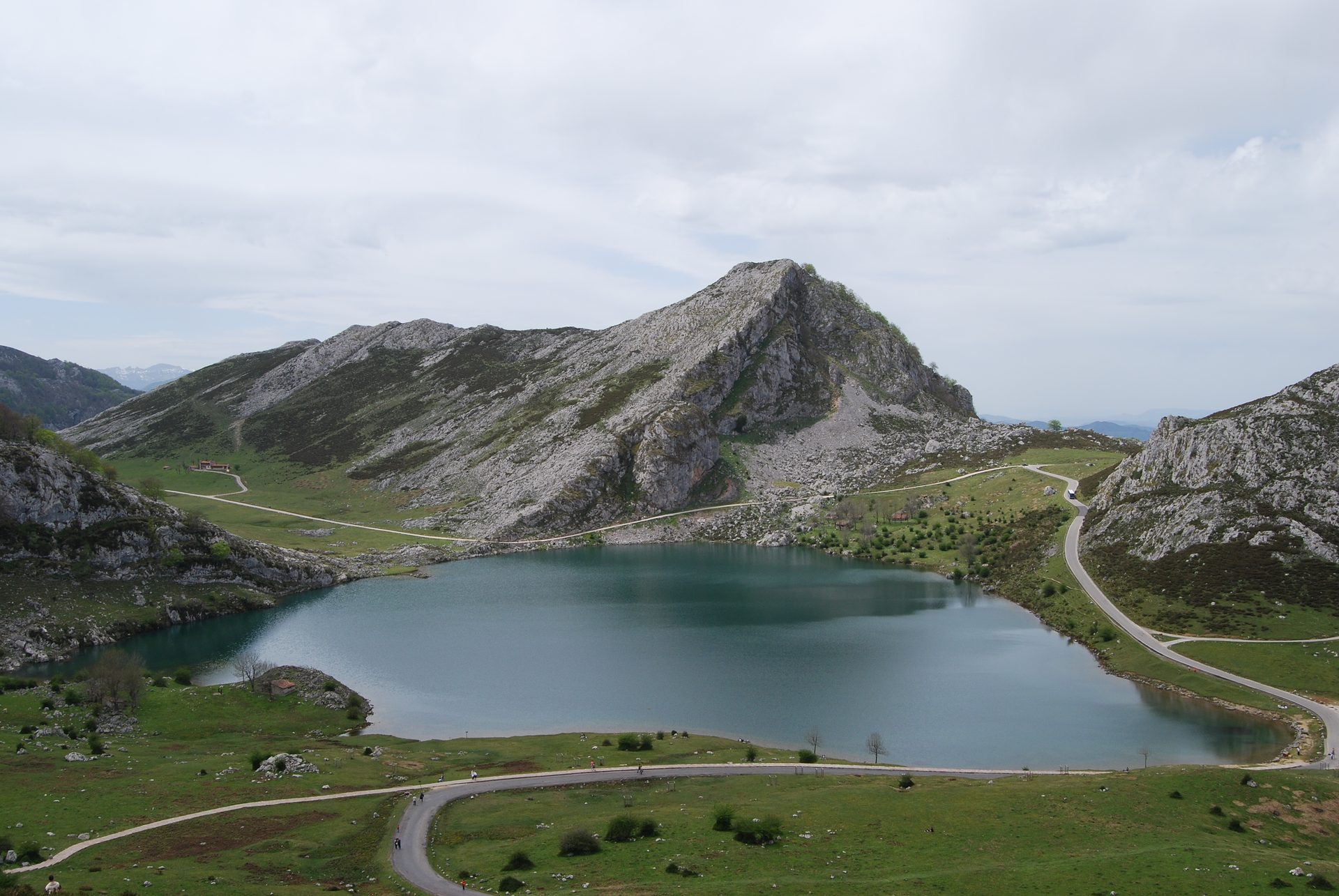
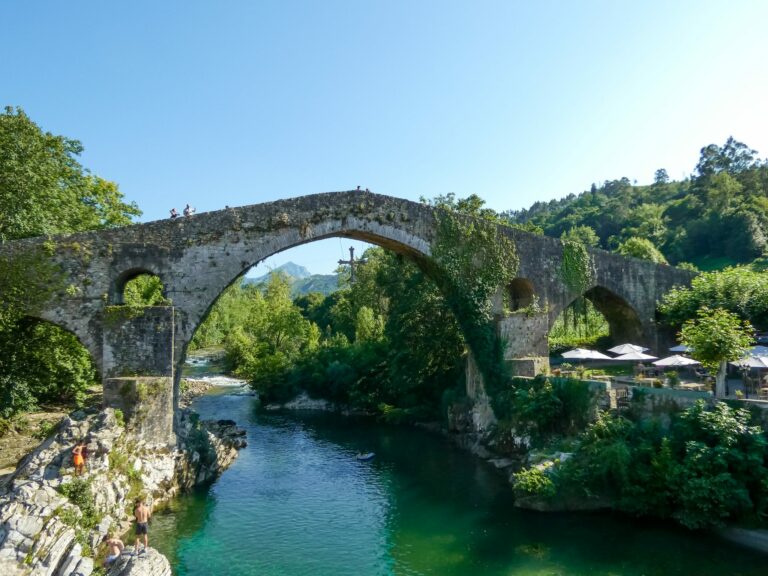
Photo: JuanjoAI, CC BY-SA 3.0, via Wikimedia Commons
- Cangas de Onís: the Roman bridge and the capital of the first Christian kingdom.
- Bear Trail (45 min): the most famous greenway in Asturias, ideal by bike or on foot.
- Tazones and Villaviciosa (40 min): a storybook fishing village and cider country.
Where to stay
To truly enjoy Oviedo, the best choice is to sleep in the center and do everything on foot. Two in-house options:
The Gran Hotel España, our family hotel in Oviedo, is on Jovellanos street, steps from the Cathedral and the Campoamor Theatre: an unbeatable location, with its own parking (much appreciated in the center).
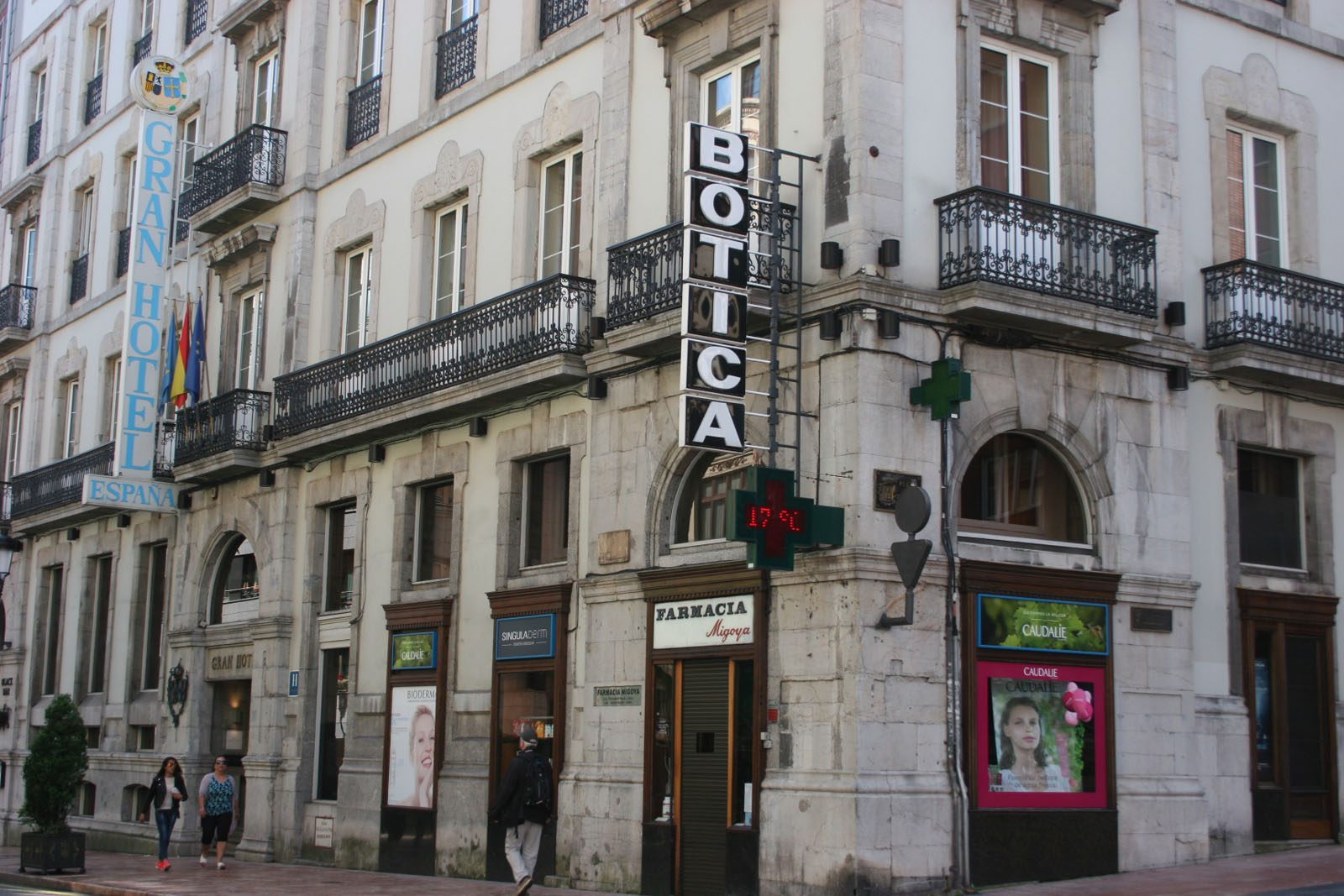
Photo: Zulio, CC BY 2.0, via Wikimedia Commons
If you prefer to go independent, the Viviendas Oviedo Catedral apartments (viviendasoviedocatedral.es) are next to the Cathedral, in the heart of the old town: ideal for families or multi-day stays, with kitchen and plenty of space.
Practical information
Getting there. Asturias airport (OVD) is about 47 km away; the ALSA bus takes about 45 minutes to the center (around €9) and a taxi between €55 and €70. By train, the AVE connects Madrid with Oviedo in just over 3 hours. By road: A-66 from León and the plateau, A-8 from the coast. If you come by car, note that Oviedo has had a Low Emission Zone since 2026: check with your accommodation how to access it.
Best time. Spring (May–June) and September are ideal: good weather and fewer people than in August. The San Mateo Festivities (around September 21st), with the Day of America in Asturias, are the city’s big week: concerts, parades and atmosphere everywhere. Winter is mild but rainy: bring an umbrella, like a good carbayón.
Fun fact. Oviedo is a candidate for European Capital of Culture 2031: the city is having a sweet moment, with new cultural programming every month. Check the events calendar on asturias.net before coming.
Guide published on asturias.net with the help of Serlib Internet