Llanes, Asturias: municipality guide
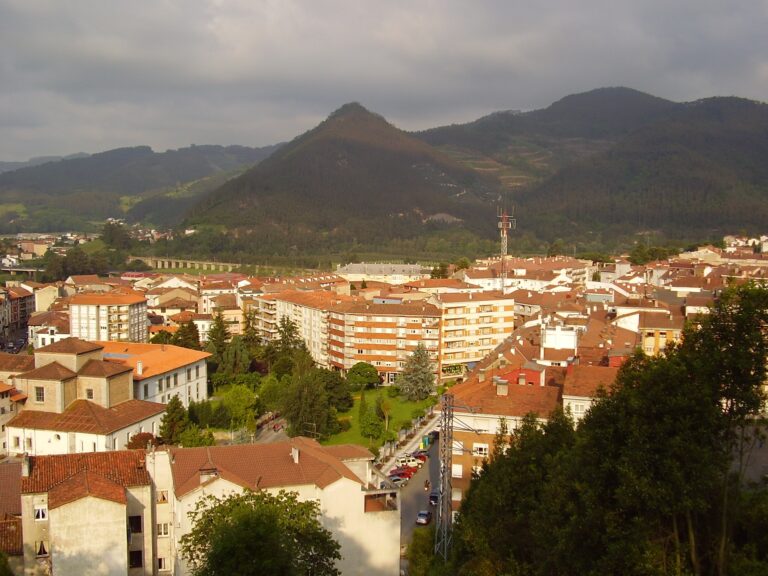
Llanes is a municipality in eastern Asturias, between the Sierra del Cuera, the Picos de Europa and the Cantabrian Sea. Its capital is Llanes. With 13,486 inhabitants and 263.59 km², it is one of the most tourist-oriented fishing towns in northern Spain, famous for its beaches, its medieval old town and the Northern Way.
Things to see in Llanes
The municipality stretches along some 30 km of coastline with around forty sandy beaches: El Sablón, in the town itself; Toró; Gulpiyuri, an inland beach reached by sea water through caves; Torimbia; Cuevas del Mar; or San Antolín, among many others. The bufones —at Pría, Arenillas, Santiuste or Santa Clara— are holes in the cliffs through which the waves expel columns of pulverised seawater. To the south rises the Sierra del Cuera, with Peña Blanca (1,182 m) as the highest point of the municipality, and karst systems with numerous caves. Part of the territory is protected: the protected landscapes of the Sierra del Cuera and of the Costa Oriental de Asturias. The rivers are short —the Bedón, Purón, Cabra and Carrocedo, the latter forming the estuary on whose banks the town stands—.
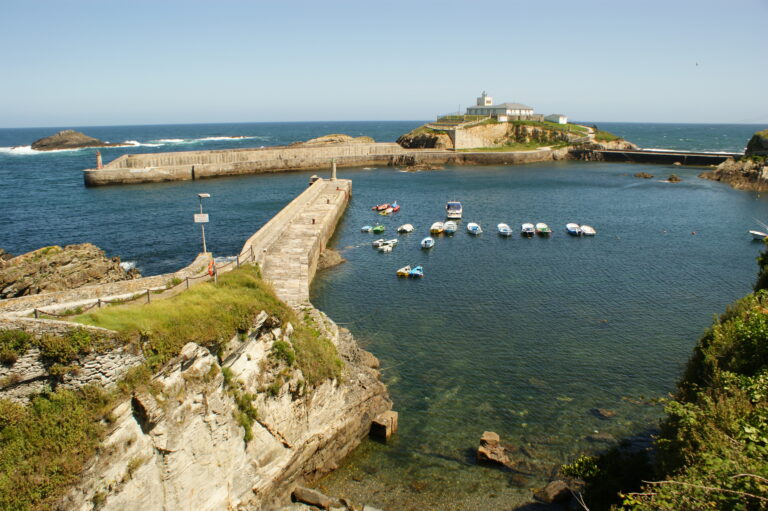
The municipality, made up of 28 parishes, has its main settlement in the town of Llanes, with a port that keeps its fishing activity. The town holds the title of «Muy noble y leal villa» and obtained its charter from Alfonso IX in the 13th century.
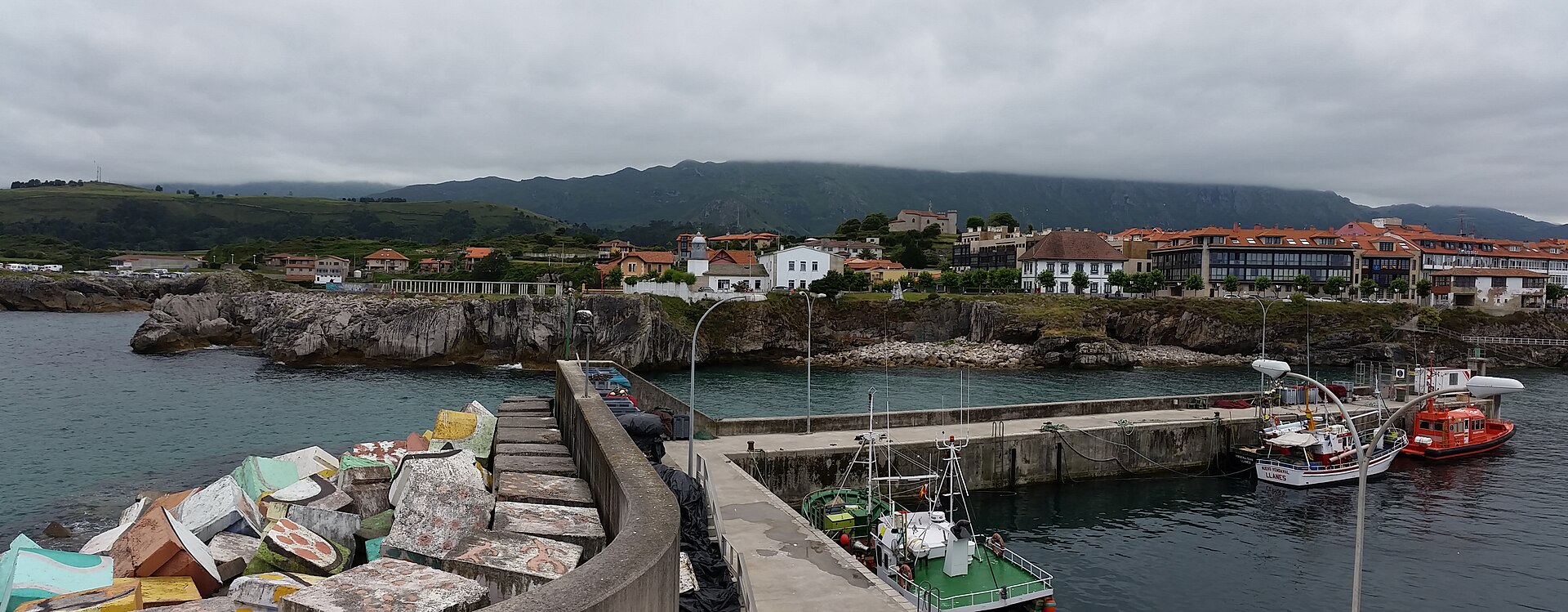
The monumental heritage includes the walled medieval old town, the basilica of Santa María, the keep, the palace of the Dukes of Estrada and the San Pedro promenade (1847); on the harbour breakwater, the Cubos de la Memoria; the lighthouse; the Benedictine monastery of San Salvador de Celorio; and the church of Nuestra Señora de los Dolores in Barro. In Porrúa, awarded as an Exemplary Town of Asturias, stands the Ethnographic Museum of Eastern Asturias. A unique tradition is that of the tejeros of Llanes, who went out in crews to make roof tiles with their own slang, the xíriga.
None of the municipalities bordering Llanes lies outside Asturias: to the east Ribadedeva, to the west Cangas de Onís and Ribadesella, and to the south Onís, Cabrales, Peñamellera Alta and Peñamellera Baja; to the north, the Cantabrian Sea.
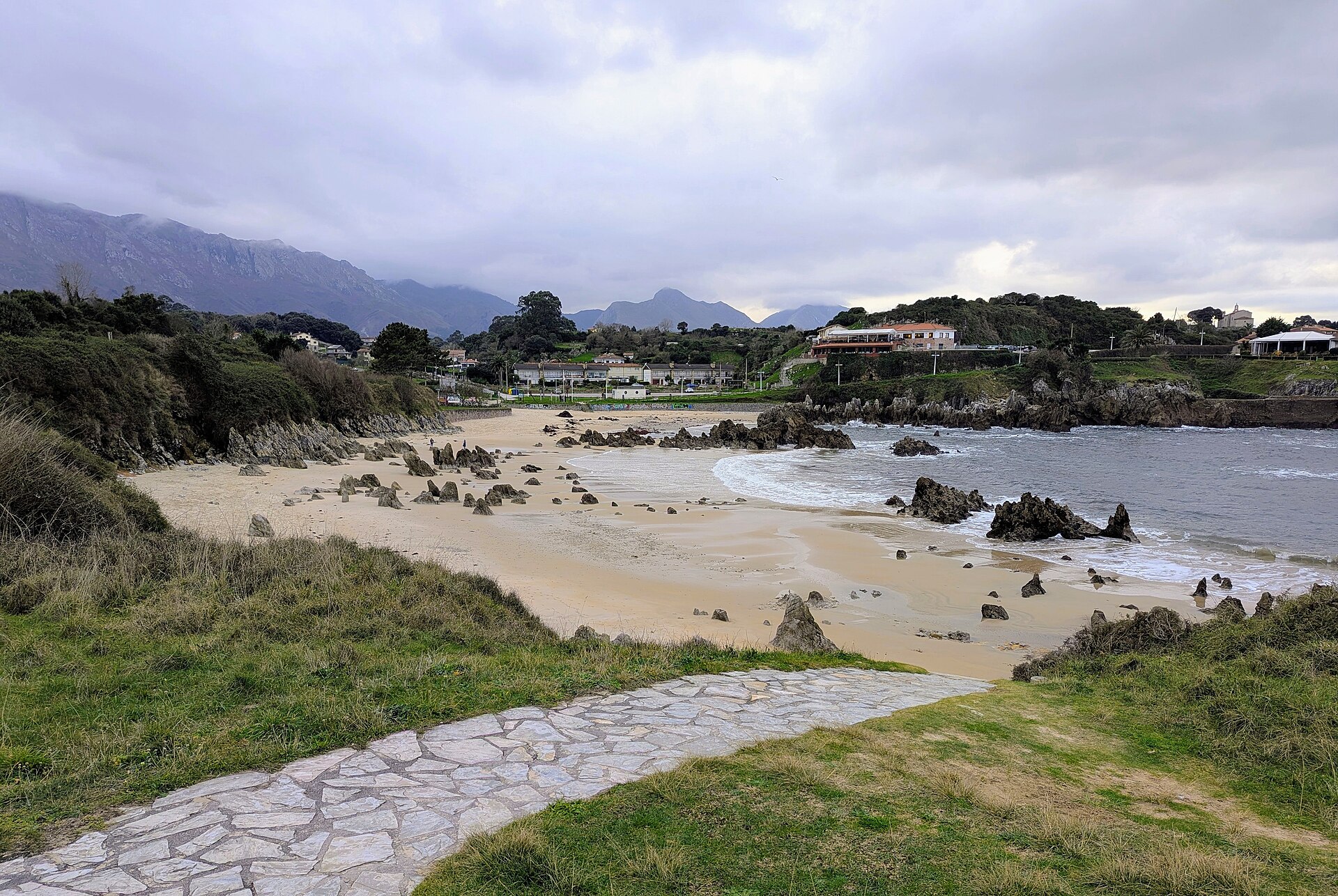
Camino de Santiago: the Camino del Norte (the Coastal Way), an official Jacobean route declared a UNESCO World Heritage Site in 2015, crosses the municipality. The Unquera–Llanes stage enters Asturias crossing the river Deva through Pendueles and Andrín, and the Llanes–Ribadesella stage leaves through Celorio, Barro and San Antolín beach.
How to get there
The A-8 Autovía del Cantábrico crosses the municipality from east to west, with exits to Llanes, Celorio, Posada and Nueva, among others; the N-634 runs parallel to the motorway. There is also a regular bus line between Oviedo and Llanes.
Festivals and gastronomy
In the town, three groups with a well-known historic rivalry organise the three great summer festivals: La Magdalena and Santa Ana in July —Santa Ana, on 26 July, with a maritime procession, a prayer for the deceased sailors and the traditional Danza Prima—, San Roque in August and La Guía in September. The patron saint of the town is Nuestra Señora del Conceyu, on 15 August. In the villages stand out La Hoguera —the felling of a eucalyptus tree and its planting in the village— in Celorio, Balmori, Nueva, Villanueva de Pría or Pancar; the Noche de las Brujas (Witches’ Night) in Barro, steeped in Asturian mythology; and La Sacramental de San Juan in Cué, with the Alfombras de Flores (flower carpets) and the great cohetada (firework display). On the table, Cantabrian fish and seafood rule alongside the typical Asturian dishes.
Municipality facts
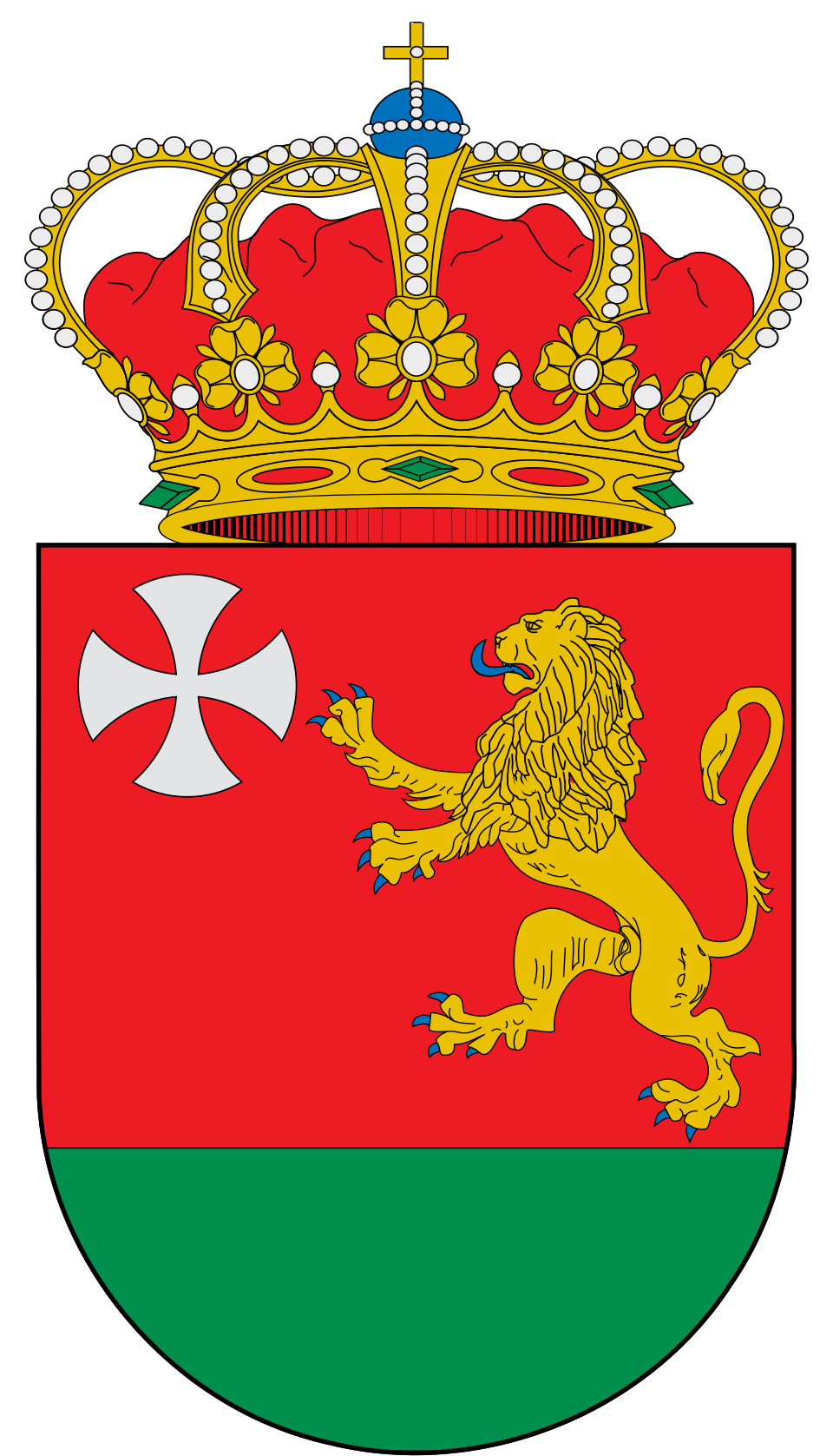
Coat of arms: Wikimedia Commons / SanchoPanzaXXI (CC BY-SA 4.0)
- Capital: Llanes
- Population: 13,486 inhabitants (INE 2025)
- Area: 263.59 km²
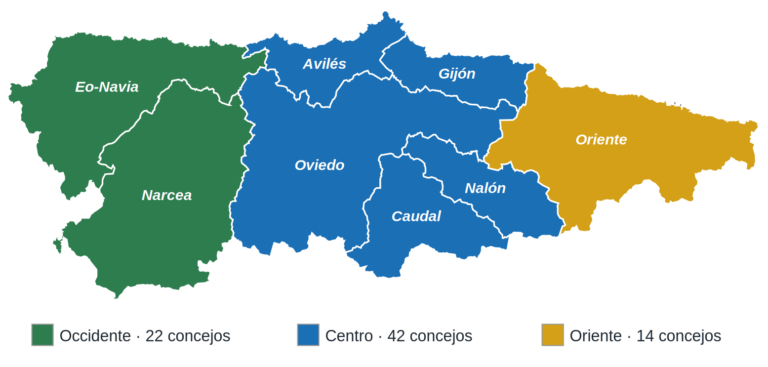
- Zone: Eastern
- Demonym: llanisco, -a
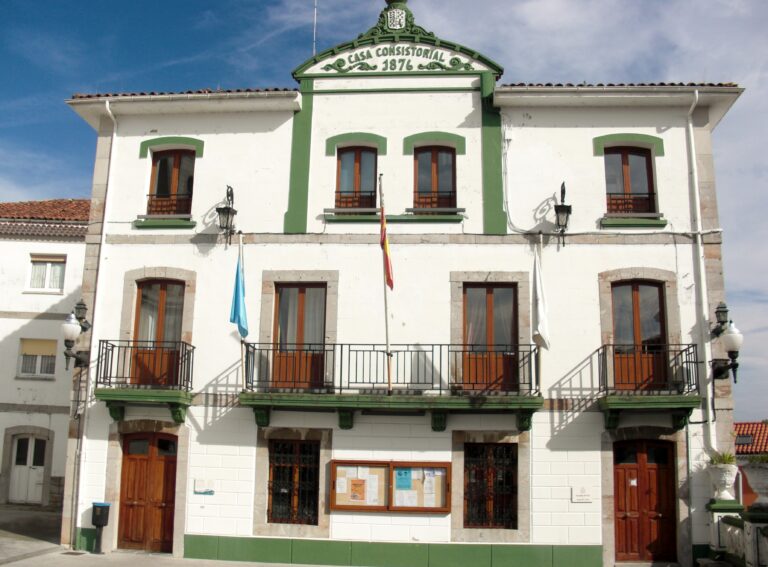
- Town Hall: Calle Nemesio Sobrino, s/n, 33500 Llanes. Tel. +34 985 40 01 02
Neighbouring municipalities
Useful links
Want to correct or expand this information? Contact us.
See it on the interactive map: The 78 municipalities of Asturias